When we go to a bar, we have an agenda. Refreshing, tasty beverages are not what most of us seek when we walk into our favorite watering holes. There is no natural lust for alcohol that beckons us to imbibe. There is, however, a yearning for connection imbued in each of us. We buy drinks, dance with strangers, and take random people home in hopes of filling a void. We believe others will give us what we cannot give ourselves. We are always disappointed.
You do not have to be gay to have this experience. For people who are, though, the emotions are compounded. We are not just looking for a partner when we intimately connect with someone of the same sex; we are often trying to find ourselves inside another person. No one really knows what it means to be “gay”; we hope to find another person who can teach us, though. That dynamic is an equation for ascertaining emptiness.
There is no greater catastrophe than a life unfulfilled. Yet, most would admit that something is missing. Every person who is gay has experienced some kind of rejection; we seek shelter in the arms of others. Intimacy cannot be manufactured, though. It cannot be found on Craig’s List. It cannot be ordered up on smart phone aps. It also cannot be served at a bar. That gut-level unsatisfaction so many of us feel everyday is really an imbedded barometer reminding us that we need to get our internal house in order. And so, we try.
We are sitting at a coffee shop on a Saturday afternoon, the latest issue of The Advocate our only companion. We feel lonely. We want to be connected. So we pull out our iPhone and log onto Grindr! The gay-dating cell phone application displays diagonal rows of dozens of men within a few thousand feet from us who we can talk to. We zero in on a shirtless guy with scant information about himself in his profile. We chat it up.
We decide during the nascent texting/dating ritual that this avatar will be our salvation. The shirtless man behind the pic will fill our void. He will see the beauty of our soul. He will love our quirky tastes, laugh at our jokes, and explore the world endlessly by our side. He will give us everything we deserve.
None of that is apparent by the few dozen lines of text we exchange, though. We decide to meet up at a downtown bar later that evening. In the flesh, it will click.
So we enter the bar with an agenda. We fail to consider that we are about to meet a distinct person with a whole host of issues and aspirations distinct from our own. We meet. We order a drink. Shirtless Grindr guy turns out to be pretty lackluster. He is rather boring. We have little to talk about. Or maybe we do. It is hard to have a real conversation with someone when you are holding at bay the disappointment that this person is not exactly who you wanted them to be.
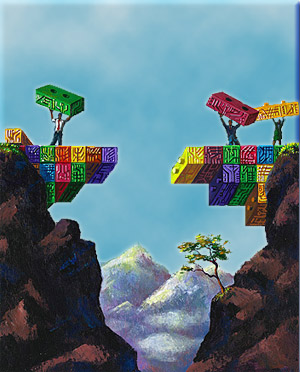
Now, we have a choice. We can politely excuse ourselves and go home to a lonely night’s slumber. Or, we can invite our bland beau to our abode. The night’s machinations can either be tame or wild; the morning’s musings are pre-ordained. Either way, he leaves. The chasm remains.
It is within that space—that void—that redemption lives. The awkward moment when we realize the person we are drinking with is not the person we want is really the instant when we discover that pieces of us are missing. We can wander the world, cruise every bar, and chat up every person in cyber space. No one we encounter will ever be able to give us what we have to give ourselves. Instead of going to out bars, we should probably be doing yoga, meditating, or just spending some quiet time reflecting on how to become the people we want to be.
When we do meet up with people, we should interrupt that awkwardness with something real. We should not be afraid to embrace the uniqueness that lies within. We should share ourselves with the people we find in front of us. We should receive individuals as they are. Our own agendas must be set aside. People are not canvasses for us to paint our insecurities onto. Everyone is their own masterpiece, worthy of faculty and symposium. Ultimately, we must fill our own gap. Only then can we receive the light of others.
This is not just a gay issue. Heterosexuals manufacture intimacy, too…and in greater numbers! There is a certain politeness in straight society that prevents the honest admission of what is really going on in most people’s lives, though. Leave it to the gays to shake things up a bit.
Let’s all try to fill our inner-chasms with more than just alcohol. Let’s stop looking for other people to make us whole. Let’s dig deep into our own firmaments. We can fill the void by mining the chasm.
 Homo on the Range