Alien on the Range

ImageThe Kansas prairie is a boundless amber carpet.  It unfolds to seemingly endless seas of grain and opens itself up to innumerable possibilities. Yet beauty is often sheathed in isolation. Anyone who has spent time in Kansas knows the dichotomy of this land—at times the sprawling nature of our state brings a sense of freedom, while at other times it’s downright alienating.

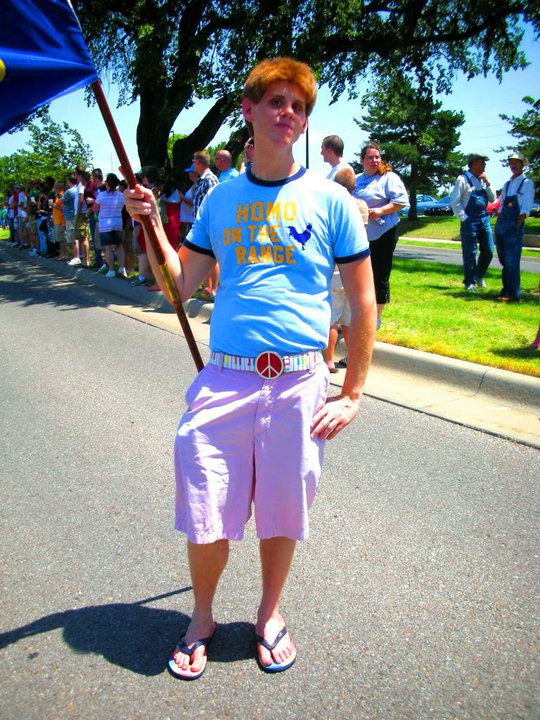
And if you’re a homo on the range, sometimes you feel like you’re living in outer space!

Just like everyone else, gay people play multiple roles in life. We’re someone’s child, we’re somebody’s colleague, we’re many people’s friend, and many of us are another person’s romantic partner.  Yet, it’s loneliness that truly is the toughest role we ever play. At some point in a gay person’s life, they will inevitable feel alienated from their peers by virtue of the fact that they are different. Connection picks the lock of alienation, and I’m happy to report that there’s an unshackling taking place in The ICT!

Kansas LGBT Community is a new group that has formed to facilitate social interactions between members of our very own local queer population. The crux of the group’s formation is to encourage healthy interaction between LGBT people and their allies in safe environments. The group holds monthly meetings on the 2nd to last Saturday of each month and often mixes up the calendar with random meet ups and happenings.  In August, I attend a LGBT BBQ, and was delighted to see a large mix of people at the event. Many of them were old friends, but more were new faced I’d never seen. These meet ups seem like a great way to meet people you might not otherwise know live in this city. That’s exactly what the group’s organizer, Danielle Phil Sanders, envisioned when she started the Facebook group that lead to the off-line socializing.

One of the biggest draw backs to same-sex socializing in Wichita has always been the fact that most social interactions happen in bars or dance clubs. When the only outlet you have for meeting other people like you is centered on drinking and smoking in a contained area blaring loud music, the quality of your indiscriminate encounters quickly devalues. I’ve know many people who have become jaded by the gay social scene here because of this.

Being an astronaut might be fun, but let’s face it—no really one wants to live in outer space! Get connected to you KS LGBT Community and end the alienation.
Truth Wins Out

Image

photo by David Quick

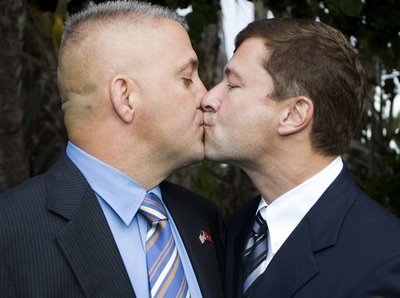
There’s a reason this homo makes his home on the range. Kansas may have a wrap for being backwardly close-minded, but I’ve found that Kansans are actually a wholesomely accepting bunch.  Truth, it seems, is a common denominator that can allow people with divergent social and political views to exist in peace.

Growing up, I wasn’t always enveloped in harmony. When I was fifteen and living in North Carolina, I coughed up a confession to my best friend. I felt a breeze of relief when the words “I’m gay” escaped my lips. The truth, I hoped, truly would set me free. That gust soon turned into a hurricane, though! I was subjected to verbal and physical harassment just about every day thereafter at school. I didn’t have any friends, because no one wanted to be seen with “the fag”. Interpersonal contacts usually consisted of being spat upon during lunch or assaulted in the locker room during P.E. The truth, it seemed, had punched me in the gut!

I soon learned, though, that trajectory follows truth. Not long after coming out, my family relocated to Kansas. My first memory of the heartland is waking up during the car ride to Wichita and seeing The Flint Hills. There’s something about those audacious rolling plains and the serenity of the majestic prairie that inspires certainty.  At that moment I vowed to always be honest about who I am, whatever the consequences.

This time, the truth didn’t just set me free—it set me on fire…kind of like one of those famed KS prairie blazes! Once I had the audacity to speak the truth, there seemed to be no stopping my potential. I’ve ran a political party, fundraised for a successful non-profit, organized art events, written and published essays, and served on community boards, all the while being 100% honest about who I am.  Kansans are a divergent bunch when it comes to politics and religion. Many are (and always will remain) conservative in thought and traditional in lifestyle. However, honesty is a Kansas value that transcends ideology. If you’re willing to roll up your sleeves and work hard, most people here will give you the dignity and respect you deserve. Home for me will always be on the range because it’s here that people have allowed me to reach my potential while being my pure, authentic self.

A crisis happens when you look yourself in the mirror and realize that you can’t lie anymore. You want to run away screaming but can’t; you’re a prisoner to your own reality. You want to lash out at someone, but there’s no one to blame. You want to bargain with God, the devil, or any other deity to trade destinies with someone else. You realize it’s all futile. There’s no escaping it. You have to embrace who you are.

If you’re hiding the truth, let it out. The reality is there’s no better place to be YOU than right here on the range.

Kansas Queer Politics: Wichita’s Legendary Moment

Image

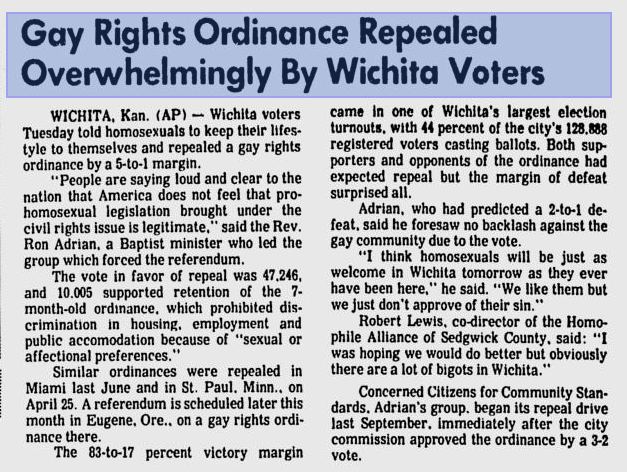
Wichita's civil rights ordinance has never been restored.

Avid readers of this column know that today, you can be fired from your job for being a homo on the range. Many are not aware of a legendary window of time where such was not the case, though. Once upon a time in a land not at all far away, it was illegal to discriminate on the bases of “sexual preference” in housing, employment, and public accommodations in Wichita—for a whopping seven month!

The ICT had a very progressive, forward thinking city commission (now referred to as the city council) in the late 1970’s. In the fall of 1977, Wichita became one of the first cities in the country to enact a non-discrimination ordinance that covered gays, lesbians, and bisexuals. The passage of the law was no accident. Wichita had an engaged and politically savvy LGBT faction that was an active, visible part of the community at-large. They knew how to organize and make things happen. They supported candidates in elections, and they educated lawmakers in office. At the same time Harvey Milk was campaigning to become one of the nation’s first openly gay elected officials by the bay, gay Wichitans were staging a little revolution of their own on the prairie.

When the ordinance was originally passed, many began talking openly about Wichita becoming the San Francisco of the Midwest. That didn’t sit well with everyone, though. Several churches were quick to organize a repeal effort, and within just a few months of the law passing, it was headed to the ballot box. Anita Bryant, apparently tired of sipping orange juice, came to Wichita to crusade for the repeal. The campaign was short, but nasty and personal. On April 9, 1978, all incumbents who voted for the law were defeated, and the ordinance was overturned by a margin of 83%-17%. Of the 57,251 people who showed up to vote, only 10,005 voted to allow gay people to have the same rights as everyone else.

San Francisco, we did not become!  Many people publically identified with backing the law were blacklisted. Several were fired from their jobs or evicted from their apartments. A good number of gay people moved away. Most who stayed either went back into the closet or marginalized themselves. As gays become more visible and involved in other communities across the country, the rainbow faded in Wichita.

Thirty-two years later, the laws haven’t changed, but Wichita has progressed. There have never been more gay people active and visible in all parts of this community as there are today. They’re not just crusading for gay rights, either—they’re opening businesses, revitalizing neighborhoods, and enriching their places of worship. Yet, the sting of Wichita’s “legendary” anti-gay past is still felt. Those who are out, though, are paving the way to a day when a law outlawing discrimination of the basis of sexual orientation (and now gender identity) lasts for more than seven months!

Lesi-Desi

Image

Original drawing by Sarah Elizabeth

It’s a warm spring night. I’m outside, sitting on a stone wall by the Keeper of the Plains along the Arkansas River. I’m surrounded by lots of people. The torches around the statue light , revealing a picturesque scene at the base where our two rivers meet. Kids bounce around. Couples caress. Intimacy ensures.

I’m in the midst of a destination hot spot for ICT romance. Much to my surprise, I notice that it’s not just the straights holding hands.  An arm locked, older lesbian couple stands behind me as a boy-duo skips gaily along. They blend into the crowd; no one bats an eye. For all the talk of “hetero-hysteria” over public displays of homo affection, everyone seems to be peacefully coexisting.

Progress is in full view. This isn’t something you’d have seen in Wichita ten years ago.

Then my blackberry beeps. I have a new e-mail. It’s from a woman named Neepa. She’s responding to my call from a previous column to interview people from different cultural or ethnic backgrounds about their experience being gay in Wichita. She’s a self-proclaimed lesi-Desi, an Indian woman who loves other women, and has lots to say on the topic of her culture and its attitudes toward homosexuality. She would love for me to interview her and feature her in the magazine, but there’s just one problem—her husband would get very upset.

To my back, two women are being their true, free selves in the presence of all who surround; in the palm of my hand– across a digital divide–another woman’s freedom to be true to herself and those around her is eclipsed. Apparently, closets painted in “White Privilege” open a lot easier than those “Made in India”.

Neepa (not her real name) pours her heart out to me in the e-mail, giving me permission to use the material if I change enough details to protect her identity. She knew she liked girls when she was a teenager. In college, she had several girl-girl romances. That was when she was far away from her parents, though. They knew nothing of her Sapphic proclivities. After she graduated, her family began pressuring her to get married. “In my culture, you had better get married by the time you’re 23 or something is not right,” she explains. The family already had their suspicions, but they decided they could “fix” any problems by rushing a marriage.

She tried to fight off her parent’s instance that she find a guy to “settle down” with, but ultimately that proved too difficult for her. “My parents had decided that I should marry the son of my father’s business partner. It was made very clear to me that I could either do this or be cut off—not just financially, but emotionally. I had to make a choice. It was my family or myself. I choose my family,” she said.

A consequence of that choice is that she’s living a double life. Neepa admits to carrying on affairs with other women. She says her husband has no idea. “I know that lying is wrong, and I want to get out of this situation,” she confesses. “My husband is a good man who deserves a woman who truly wants to be with him. I can’t give him that.” Right now, she’s trying to fight off pressure from him and both of their families to have a baby. She secretly takes birth control. “I don’t want a child to be born into these lies,” she says.

Despite admitting that her choices are negatively effecting herself and everyone around her, she ends her sociological monologue with this chilling line: “There are some cultures that just aren’t ready for the truth. Most Indians will pretend there’s not a tornado, even as it rips their house out of the ground in front of their eyes. I don’t want to get blown away, but I just don’t know how to find shelter.”

The torches dim as I finished reading the e-mail. Under the starry Kansas sky, I’m able to be myself and live my life exactly how I want. Others around me are doing the same. As the waters of the Arkansas and Little Arkansas Rivers blend into one body, we blend into one community. Yet somewhere in Wichita, a husband falls asleep in a bed of lies, caressing a wife drained from banging a cultural tango. To the truth through difficult.

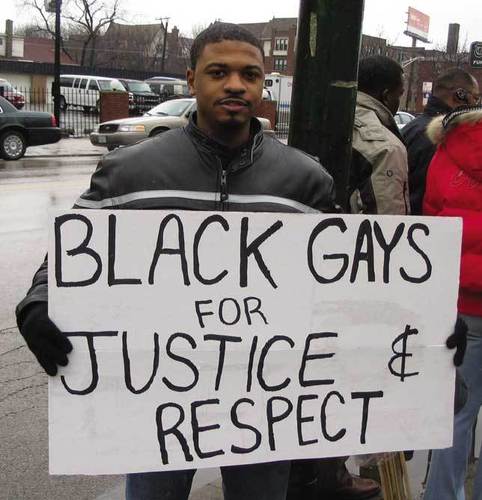
Gay Civil Rights. Black Civil Rights.

ImageGay civil rights, black civil rights. Same issue, same struggle, right? Not so according to one very introspective ICT African American lesbian. Though she had to conceal her real name and identity, “Gail” offers a stripped down glimpse into what it means to be gay and black in Wichita. She was kind enough to share her “naked” thoughts with all of us.

“Drawing parallels between the experiences of African Americans and those of gay Americans is a common misnomer made by white people,” Gail said. “We need to dig deeper to understand the differences in culture that result in different racial communities treating their gay and lesbian brothers and sisters differently.”

Gay people have never been systematically rounded up, loaded onto horrific boats, and sold into slavery. They haven’t suffered the same systemic economic and social inequalities throughout history. Gay people can also walk into a room without everyone knowing their sexual orientation.” When you’re black, you can never conceal your race. Gays can choose to hide, but when you’re black, there’s no hiding from prejudice,” Gail points out.

It’s no secret that the blacks and the gays don’t always peacefully coexist. Nationally, African Americans are far more resistant to accepting homosexuality than Caucasians. When Proposition 8 passed in California, 90% of black people voted for Obama, while at the same time 70% of them elected to outlaw gay weddings. Religion is a big factor in the divide. African Americans are a religious and church-centered bunch. Many sociologists contend that it’s socioeconomics, not race, though, that plays a central role in black homophobia. Gail concurs. “It’s about education. The more educated a person is, the more accepting they tend to be. The education rates are lower among blacks and that’s part of the problem. If we want to address homophobia, we need to also address access to education. We need to get serious about ending poverty,” she said.

“Gay people also need to stop being afraid to come and talk to us. Part of why Prop 8 passed was due to the fact that the white gay leaders were too scared to outreach to black communities. They viewed us as the enemy, and so we voted that way,” Gail said.

Gail believes, though, that an opportunity exists locally to move the dialogue forward…but she admits that some things have to change first.

She paints a picture of a Wichita black gay community marginalized and hidden. She believes that proportionally there are just as many black people in town who are gay as there are white people. The different is in how they deal with it. “There’s a lot of hiding, and a lot of fooling,” she said. “Some people hide it from their family, but are out to certain friends. They date, but keep it quiet. Then there’s that infamous “down low”—what I call the fooling! A lot of people just find the social pressures to hard so they fool everyone by pretending to be straight. Just last week I saw a man at church with his wife and kids…and the week before I saw him out at one of the bars kissing a dude!”

She characterizes Wichita African Americans in general to be a very tight-knit community. “Everyone knows everyone,” she said. “Most of us who are here grew up together. Our moms still talk to each other. Our kids play together. The closeness is good in the sense that it creates lifelong bonds and friendships. It has a dark side, though, in that it can lend itself to gossip. And let me tell you, when it comes to other people’s kids, black people love to gossip!”

It’s this close-knit spirit that Gail sees as the biggest opportunity for progress. She believes that local gay rights groups need to do a better job building relationships with black leaders. She says they shouldn’t be afraid to get into the churches and meet with the ministers, too. “Really, if more people were just honest and spoke from the heart, this issue would be go away. I know so many parents who have gay kids and they just hide it from their friends. When it comes to black gays, the parents are in the closet just as much as their kids,” she said.

Gail struck me as someone who could, herself, be a powerful communicator within the black community for the LGBT cause. She’s an active member of her church, a mom raising kids with her partner, and a dynamic professional. She’s out to her family and her congregation. She says most have accepted her. I was surprised when she requested that I conceal her identify. “This is Kansas, and where I work, we don’t have a non-discrimination policy. Until we do, I’ll have to be a bit on the down low myself, sadly,” she said.

Gay civil rights and black civil rights aren’t the same fight, but it seems they have bigotry as a common enemy.

Honesty: A Latino Family Value

ImageJaron is patriotic, young, Hispanic, and gay. He’s a son, a brother, a friend, and possibly someone’s boyfriend.  He’s a student and an activist. He’s also a former soldier in the US army. Identity is a myriad of personal circumstances. Take one part of who someone is away and they’re not a whole person anymore. They’re compartmentalized and incomplete.  Mandate that someone keep a significant part of their life a secret, and you’re asking that person to be less than honest.

Living in between the lines of truth and trickery is exactly where Jaron found himself, though, both in his family and career.  It’s a familiar place for people who serve in the US military under Don’t Ask, Don’t Tell. Telling the truth means you’ll lose your job—and more importantly, your ability to defend the country you love. It’s also a familiar place for people who are Hispanic. Coming out in a Latino family means risking losing su familia, your family, the people who love you and the backbone of who you are as a person. Latino culture places a high value on family and extended family connections.  Because homosexuality is seen as being a threat to the family structure, many gay and lesbians within the Latino community take up don’t ask, don’t tell us their mantra. Their families learn not to ask about their love life. They discern how to keep their love a secret.

Secrets don’t settle well with Jaron, though. He came out at 16. He references the hindrance hyper-masculinity plays in Latinos being able to be themselves. Placing a high value on machismo, it makes being openly gay very difficult. “My coming out story was nothing short of turbulent. I came out the summer before my junior year in high school. I was very afraid of what my family and friends would think of me. My father was brought up in the old school way. He was a very devoted Baptist, and took the news very hard. My mother was no better. She held herself somehow accountable for me being gay,” he said.  “The rest of his family was equally aghast. “My immediate family met me with disbelief, and thought I was in a phase for awhile.”

Unlike clothes, you don’t try on a sexual orientation. Jaron knew he wasn’t in the middle of a phase.

One day after he graduated high school, though, he did try on a uniform. An interest to serve his country lead him to a new phase in his life—as a soldier of the US army. Having come out once, he didn’t want to step completely back in the closet. “It was more of an open secret to begin with. I just used gender neutral terms, never really talked about dating women specifically… that sort of thing. I came out when I was deployed to Iraq. When you’re in a place like that, no one really cared. There were many more important things to be worried about,” he said.

Jaron described a military culture that seems to be in transition on this issue. He pointed out that younger soldiers, most of who grew up around other people they knew to be gay, were a lot more comfortable. He is quick to note that his sexual orientation never affected his unit’s cohesiveness and ability to work well together. His honesty, actually, had the opposite effect. “There were some guys who didn’t really agree with me being gay at first. After awhile though, a lot of them came around and acknowledged that being gay has no real bearing on your character. They supported me no matter what. Ultimately, I found it brings you closer when you’re honest with each other,” he said.

Jaron’s service in the military ended last December. He’s now back in Wichita and involved locally as a political activist. He can be classified by many identities, but ultimately it’s his self-identity that matter most. The ability to be yourself and integrate who you are into the family dynamics and culture you were born into as well as the career you choose is the paramount of American heroism. It’s also an homage to the Kansas value of honesty.

If you’re a not-so-homogenous homo on the range, tell me you’re story! I want to hear from Wichitans from diverse cultural and ethnic backgrounds. E-mail me at jasonaarondilts@gmail.com

Kansas White Boy, Interrupted.

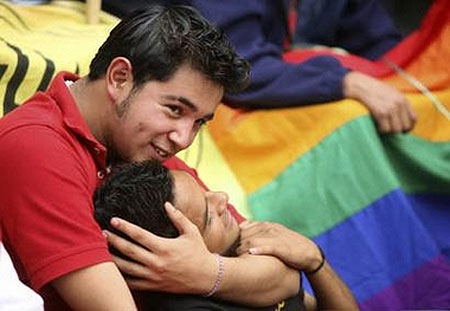
ImageEvery wonder why the rainbow is synonymous with gay culture? Those six colors that fly proudly on flags and are affixed affectionately on bumper stickers are actually a representation of diversity. The gay community is unique as a minority group in that it has no monolithic ethnic, racial, religious, or cultural heritage. It’s simply a collection of people whose sexual orientation is, well, queer.

Although white isn’t a color in the “gay rainbow” it’s certainly the unofficially color of the gay community.  Just as with society at-large, gay Caucasians get the lion’s share of attention, power, and respect. Meanwhile LGBT people of color, many of whom come from cultural backgrounds averse to homosexuality, are marginalized two-fold. It’s not uncommon for them to lose their family because of their sexual orientation and then subsequently have difficulties finding acceptance from their gay peers because of their ethnicity.   If you’re openly gay and not white, you probably feel like you’re running with a double edged sword pointed at your abdomen.

Recently, I got to witness this pain up-close when I met a guy named O. He was born and still lives in New Jersey, but his parents immigrated to the US from Pakistan. O is about as American as you can get, insisting on eating a Wendy’s hamburger every time  I opine about the food at ICT’s Indo-Paki Bistro, Zaytun. The first time that we talked, I felt an instant spark. His personality was an enticing blend of intellectual brilliance, geeky precociousness, and political savviness.   I wanted him. He wanted me. Unfortunately, reality got in the way.

When we start a relationship, we usually bring our baggage with us. The luggage that O was carrying was given to him by others, though. His parents moved to a foreign country and brought the values from their mother land with them; meanwhile their kid grew up with an exclusively American experience, feeling detached from the traditions his parents held dear. He made a very brave move by coming out in high school—something South Asian kids don’t do because it scorns the family’s name. Right around the time he began getting harassed in school for being gay, September 11th happened. Suddenly, he was a fag and a terrorist.

One night, O tearfully confessed to me that he felt ugly, dirty, and disgusting.  He couldn’t be with me because he could barely tolerate himself. Everywhere he turned, he was being told that he was sub-human and less-than. At the intersection of personal freedom and cultural reality, he had become a dart board for all of the world’s social phobias.

I realized then that there are some things my white entitlement just can’t grab. Kansas white boy, interrupted.

This experience has also interrupted the focus on this column. It’s time to make Homo on the Range more reflective of not just the iconic rainbow that’s supposed to represent everyone in the gay community, but also more reflective of the rich cultural diversity within our city. So, I want to hear your stories! Over the next few months, I want to profile a gay Wichitan from a different racial/ethnic background. I’m particularly interested in finding a local Middle Eastern/Indian, African American, Latino, and Asian to talk to about the conflicts between personal honesty and cultural traditions. Identities can be concealed and will be held in the strictest of confidences.

E-mail me at jasonaarondilts@gmail.com.  Gays may be a divergent group of people united by a simple trait, but we can coalesce to increase understanding and awareness within all communities right here in The ICT.

Uganda Be Kidding Me

Half a world away, a very serious human rights matter has risen with tracks that follow back to our own yellow brick road.

Sure, Kansas queers have a couple of things we could complain about. It’s perfectly legal to be fired from a job for being gay in this state. A constitutional amendment exists to deny same-sex couples basic legal rights. However, there’s something gay Kansans do have here that our friends in the east African nation of Uganda may soon covet- the right to be alive.

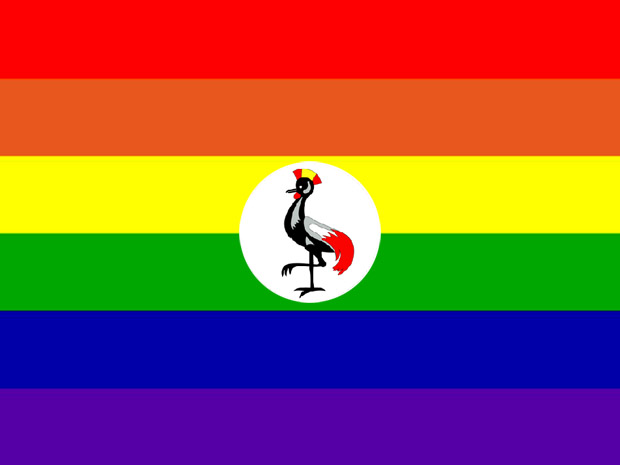
It’s actually illegal to be gay in a number of places abroad. Punishment ranges from large fines to public beatings to prison sentences in many places. A bill has been introduced in Uganda’s parliament that would go beyond that by mandating the death penalty for what the bill’s author coins “aggravated homosexuality.”

Uganda be kidding, right?

Sadly, no, and it isn’t just gay people who need fear retribution.   Anyone who knows a gay person and doesn’t report their knowledge to the police will be thrown in jail. Anyone who advocates or speaks out on behalf of gay rights will also get locked up.  If you lived in Uganda, every person reading this magazine would be in big trouble—unless you turned me into the police to be executed!

As we Americans argue over if gay couples should be allowed to marry, elsewhere, there’s an argument taking place over whether gay people can just BE. I, of course, write this column with my western perspective.  In Uganda, family is a keen value; anything that threatens its traditional structure is a problem that must be stopped. Homosexuality is seen as being the death-keel to traditional family values, so thus, the death penalty is seen by some as a suitable solution. I know that different societies have different values and cultural beliefs. There’s a fine line between tolerance and tyranny, though.

There’s also apparently a not-so-fine line between Kansas and Uganda politicians.

The author of this bill, Uganda Member of Parliament David Bahati, is a key associate of the American “secret society” known as The Family. It is well documented that our own Senator Sam Brownback is among this ultra-conservative clan. Jeff Sharlet, author of a book documenting The Family’s ties, says the group has funneled millions of dollars into the Ugandan anti-gay campaign, and considers Uganda’s President Yoweri Museveni as the “key man” for protecting family values in Uganda.  Sharlet also says Museveni can go to Brownback if he wants money for arms or any other project—such as getting this bill passed.

This is quite troubling given the fact that Brownback is the apparent frontrunner to become Kansas’ next governor this fall. In the past, he has used his influential status to aid other global humanitarian issues, such as working to end international sex trafficking. On this issue, though, he has yet to comment or detail his involvement with Uganda officials as it relates. It’s a deafening silence; it’s not a quashing quiet, though.

We have the right to do something in Kansas that our gay brothers and sisters in Uganda don’t have right now. We can ask questions and demand answers. No one’s going to execute us in Wichita for demanding to know the depth of our Senator’s involvement. No one will go jail for asking him to use his apparent connections to speak against and stop this atrocity.  In fact, you can call his office right now and let his staff know you want to see some action– (316) 264-8066. It’s an issue that may seem a world away, but apparently it’s been blown straight to Oz!

(You can also e-mail Brownback’s office by filling out a comment form at http://brownback.senate.gov/public/contact/emailsam.cfm)

Homo, Here’s a Hope

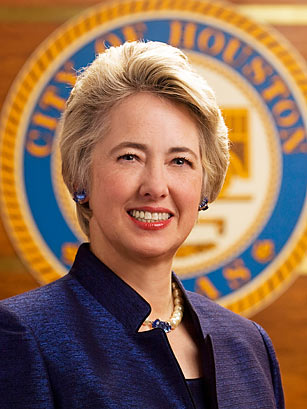
ImageIf you’re a gay looking for reasons to be grumpy, you can definitely find some! In the past few months, marriage for same-sex couples has been voted down in Maine and rejected by New York and New Jersey’s state legislatures. If you’re a homosexual looking for the happy, though, you can take heart in the election of Annise Parker, Houston’s first out-lesbian mayor and the homo-in-chief of the 4th largest U.S. city. We can’t get married, but we can get elected! Sometimes, outlooks are only as grim as you choose to view them.

Homo, here’s a hope!

A simple fact seems to have emerged over the last few years: Americans are becoming comfortable with gay people a lot faster than they are the idea of gay people getting married. Like it or not, it’s a reality we have to face, especially in more traditional places like Kansas.  That may not be such a bad thing, though!

Consider the numbers. Houston is a city with 2.2 million people now being lead by a lesbian. In contrast, there have been about 12,000 same-sex marriages in Massachusetts since it became the first state to allow gay nuptials in 2004. Over the past decade, the number of openly gay elected officials nationwide has risen by more than 200, with about 450 homos holding public office. There are cities much smaller than Wichita and states more conservative than Kansas that have city council members, county commissioners, sheriffs, and state representatives and senators who happen to be gay.  Most of these candidates didn’t run because of their sexual orientation; they ran because of they are community-oriented.

The numbers tell a simple fact—when folks get to know us as people, they judge our character, not our characteristics.  Aside from that, though, a broader, more significant impact is had when we take the focus off of ourselves and put it on to other people.  We’re affecting far more lives toiling to build stronger communities than we ever would sweating to plan the perfect wedding!

At the end of the day, all of us are just people. Often when we focus on the differences, though, we become representations of issues much larger than ourselves in the minds of others.  We’re better off toiling toward gradual acceptance than we are fast-tracking a controversy the culture-at-large isn’t ready to embrace. That doesn’t mean that we change our core beliefs or stop standing up for what we believe is right. It just means we accept reality for what it is and do what’s most effective.

Our Kansas motto implores us to look to the stars through difficulty. Those shiny, celestial objects point the way to distant, yet brighter days. True, there won’t be any homos getting hitched on the range anytime soon. But, could there be a city council member or mayor who happens to be gay in the near future? It’s certainly not outside the realm of possibility! Hope is only as far off as we allow it to be.

The ICK Factor

Virgin.

When you see that word, it’s likely that its sexual nuance is the first thing that comes to mind. As a concept, though, “virgin” is more encompassing than simply describing a person’s first sexual experience.  To be virgin is to be untapped, undefined, and undeveloped; it is an empty slate with endless possibilities. Limiting that word to its corporal connotation only limits the essences of these potentials.

Homosexual.

Odds are that when you read that word, you also immediately think about sex—same sex. Let’s be honest. That probably makes some of you uncomfortable. It likely even grosses out many of you who consider yourselves to be open-minded. That’s because when we think of words related to sex, we often immediately think of how those words apply to us. A happy heterosexual going about his or her day who happens upon the word “gay” or “homosexual” immediately has their sexual identity subconsciously projecting unsavory mental images of themselves engaged in same-sex acts. ICK!

That “ICK!-factor” is the root of a lot of the stigma and problems gay and lesbian people face. You don’t have to be a bigot or a hatemonger to be slightly grossed out by another person’s private intimate practices. However, when that disdain manifests itself in discriminatory behavior (like not hiring someone for a job because they’re a lesbian or not buying advertising in a magazine because it employs a gay writer) well, that’s an entirely different matter.  When it comes to words and their subtexts, we need to get our minds out of the gutter!

Sex is actually a very small part of what it means to be a homosexual. Most of us are so busy working, spending time with our friends, being with our families, and occasionally relaxing that we don’t have a whole lot of time to spend in the bedroom. True, new relationships probably bring an uptick in libido. However, committed partners tend to find a carnal wane as the routines of daily life take hold. Sound familiar? The ratio of sex for heteros and homos really is a level field.

The field should be level outside of the bedroom, too!  More important than legal rights are social interactions. The “ICK! Factor” contributes to a lot of the reasons why straight people are sometimes apprehensive to mix with the gays. There’s a subtle fear that association will lead to amalgamation. The simple fact is that sexual orientation is not contagious. Either you are gay or you are not. If your mind is conjuring up unsettling imagery when you see or hear of homosexuals, it’s your thoughts that need to change—not the people you’re thinking about!

Just like putting “virgin” in a box dilutes its meaning, we’re limiting the holistic possibilities for homosexual people when we box up that word right along with it. Let’s take our focus off of sex and put it on to people. In doing that, our mind itself becomes like a virgin.

Previous Older Entries Next Newer Entries