A Happy Homosexual

“Show me a happy homosexual and I’ll show you a gay corpse.”

That was the summation of the queer experience circa-1970, voiced by the character Michael in milestone movie “Boys in the Band”. Often cited as the first major film to honestly depict gay life, the realities it showcased mirrored the times. The characters were generally sad, substance addicted, and sexually compartmentalized. Though immortalized in queer cinema history, the film left the impression that being gay was rather a drag.

June is gay pride month. It’s the time of year when those famous drag queen-laden parades and rainbow-saturated marches happen. It’s when LGBT people come together in a public way to declare with our presence that we are not ashamed of who we were created to be. Anyone who wonders why we gays insist on having these events should remember the quote above. Pride is how we fight back against a dejected self-narrative. It’s our anti-drag.

As “it’s gotten better”, some are questioning why we need to continue such events. Many have suggested that pride augments the very thing we are trying to diminish—our differences. The simple fact is, people are different; and that’s not bad!  In the past year, there have been an alarming number of publicly reported suicides among LGBT teens. Flying a rainbow flag may seem frivolous, but to the 13 year old kid who happens by a march, that flag could end up being a life line. Sometimes, you just need to know you aren’t alone. Pride gives us visibility.

Variety is what fills life with intrigue and meaning. If we don’t celebrate our diversity, though, someone will end up vilifying it. Remember that “kill the gays bill” in Uganda I wrote about several posts back? It appears poised to become law after nearly two years of international wrangling. In the wake of a deteriorating economy and under the rule of a dictator, a wave of “homosexual hysteria” has swept across the East African nation. Gays and lesbians are being blamed for the downfall of their society, an idea promulgated by several prominent leaders on the American religious right. Being gay is already a statutory crime, but that apparently isn’t enough. When hateful ideologies get transferred to countries with extreme poverty and limited access to education, there can be dire consequences. If it does indeed become law, gay people in the country will be executed—and their straight allies will face severe prison sentences if they voice their support for LGBT individuals. Gay corpses and imprisoned heteros are the consequences of being invisible.

The good news for those of us on the range is that we can publicly and visibly assemble without fear of such extreme government persecution. A lot has changed for the American homosexual since Michael’s band of boys first pranced across the silver screen. In the years following, LGBT people have come out and become important forces in local communities and economies. In fact, some of the most successful U.S. cities have the most progressive laws and accepting attitudes on the issue of gay rights. No longer are we sidelined into lives of desperation, secrecy, and unhappiness. In 2011, and yes in Kansas, gay truly can be synonymous with happy.

This June, embrace pride. Gay, straight, bisexual, lesbian, or transgendered, all of us should celebrate the totality of who we are as individuals. When Wichita’s pride festival happens June 24th and 25th, exercise your right to assemble. Do it for our brother and sisters who can’t a world away.  Do it to show that being gay isn’t a drag!

Show me a happy homosexual and I’ll show you a thriving community.

Boomer Boomerang

Impact is measured by a convergence of people, place, and time. Grasping particular circumstances and harnessing a certain momentum at a critical point in history can leave a palpable legacy. Fifty years ago, a flagrant force began to stir subdued souls.

To everything, turn, turn.

Boxed into black and white suburbia, restless youth wanting more than company salaries and pallid picket fences began to rebel. What ensued is a decade that will forever be engrained into our national psyche. A controversial war was killing youths by the thousands. Protesters were rising up.  A civil rights movement was changing social and legal possibilities for blacks and women. A sexual revolution was “freeing love”, redefining many social mores. A sense that a new generation was going to alter the course of history permeated. In the end, change did come to fruition in countless areas. However, many of the promises that came with the times were ultimately unkept. A backlash ensued.

Sometimes, the energy of a particular period never fades. It marinates. It reincarnates, rebuffed and refined.

There’s evidence that the spirit of the sixties is manifesting itself in the youth culture of today. Much of popular art, music, and fashion harkens back to that psychedelic era. Listen to the music and analyze the fashion of popular groups like MGMT, The Dandy Warhols, and even the Jonas Brothers. You’ll see a boomeranging not just in style, but also with substance. Vintage has definitely come in vogue in other facets of life, too. With that comes an appreciation for not just material objects, but also the spirit of the time in which they were manufactured. It’s a badge of honor among many twenty and thirty-somethings to find a majority of their wardrobe at a thrift store. As “hipsters”, “scenesters”, and other millennial sub-groups purchase psychedelic frocks from the shelves of Urban Outfitters and pilgrimage to IKEA for simplistic, yet styled furniture, they’re making a statement about their values.

More important that commerce, though, are cultural conditions. Another unpopular war is being waged. Advances in civil rights, this time for gays, are being sought. Technology is changing how we interact socially and do business globally. An economy turned on its head is leading to a re-examination of fundamental values and expectations. There’s a lot of uncertainty, but with that comes yet another chance for a generation to leave an indelible imprint on the tapestry of history.

As energy is re-birthed, it is also redefined. There’s a key difference in the change in styles and mores among today’s youth. This isn’t a rebellion. This is simply a “propellion”—a forward moving evolution. We’re different from our parents. What we value is different. How we see the world is divergent. However, we aren’t living our lives in opposition to the mores of the generation that birthed us. Old ideologies simply don’t work for us. We have our own rendezvous with destiny, and this is our moment to live history. In this, perhaps, we can finally fulfill some of those seemingly utopian broken promises, sans backlash.

A time to heal? There is a season. Turn. Turn.

Golden Grains of Contradiction

There’s a vastness to Kansas that foreshadows boundless possibility. Open fields on flat land that eyes can see for miles ahead impress upon us the promise that we can fill that space with anything. There can also be a restraining aspect to that scale. Entrenched ideologies can limit who settles and how land is developed. When it comes to being a homo on the range, we walk through a field of dichotomy.

There are grains of subtle progress, though. By now, you’ve probably heard the new Lady Gaga track, “Born This Way”.  Whether you think it’s a cheap rip off of Madonna’s “Express Yourself” or the hottest tune to drop in a decade, there’s undeniable substance in this song. The loud lyrics are ironically birthing a quiet revolution. It’s impossible to divorce the explicit message it sends: if you are gay, it’s by God’s divine, beautiful intent and you should celebrate that! As teenagers struggle to accept themselves, the power of hearing their existence positively affirmed via a buoyant ballad on the radio cannot be understated.

Nor can the effect this song is having on the hetero-masses be ignored. Recently, I was working out at the YMCA and happened to catch a glimpse of a Zumba class in session. Soccer moms were dancing up a storm to this track, and as the lyrics “no matter gay, straight, or bi, lesbian, transgendered life I’m on the right track, baby I was born to survive” roared, no one recoiled; in fact, they seemed to step it up!  These are the same mothers who drive mini-vans full of kids. Some of those kids will one day realize that they’re gay. Popular culture has more of an effect on the average person’s worldview than most of us care to admit. In this instance, though, that may turn out to be a very good thing for LGBT acceptance.

Expansive fields are filled with hope!

There are also thorns in the pasture, though. On the same day these Zumba moms were sweating with Gaga, the Kansas Legislature was cleaning up outdated state statutes. Part of Governor Sam Brownback’s campaign promises included establishing an “Office of the Repealer” that would work with state lawmakers and citizens to get outdated laws off of the books that drain economic development. Statutorily, being gay is a crime in Kansas, punishable by fines and prison terms. The U.S. Supreme Court ruled the same-sex sodomy law unconstitutional in 2003; however the language in state law was never removed. When a motion was made in the KS State House to include this law in the repeal effort, it was block—by a prominent Kansas Democrat. State Rep. Jan Pauls of Hutchinson, along with The GOP’s Rep. Lance Kinzer of Olathe, took the lead to ensure that being gay remained a crime in The Sunflower State. For all the talk of attracting new businesses to Kansas and keeping our young people from moving away, stuff like this doesn’t exactly help! The message from our political leaders is clear: if you are gay, we would rather you be somewhere else. Some of us will probably oblige, and other states will enjoy our talents and our tax dollars. Brownback should consider renaming this new wing “Office of the Repelor”!

Vast territories are stymied, their full potential never allowed to blossom.

The queer experience in Kansas is anything but a straightforward path.  Meaningful progress is being made every day on an individual level as more people feel comfortable coming out, opening the eyes of their straight peers. Damaging actions not just to LGBT rights, but also to the long-term economic viability of our state, are simultaneously holding back our full, collective potential. We need to rectify this dissonance so that we can all walk with pride across the land The Midwestern gay movement.

Homotopia

Image

photo courtesy of NakedCityWichita.com.

Nutopia is a state of mind. When John Lennon and Yoko Ono announced the birth of their conceptual country in 1973, they were essentially envisioning a world where brands and boundaries bounded no one. Their April Fool’s stunt didn’t gain this peacenik nation sovereignty. It did, however, galvanize a mantra for solidarity; who you are and where you come from should have no credence on where you can go.

Thirty-eight years later this simple idea remains compellingly relevant. Isn’t it hypocritical, though, for a column with a moniker based largely on identity politics to champion the idea of a label-free world?  Sometimes associations have to be deconstructed before they can be set free.

The same month that Nutopia was conceived, homosexuality remained classified as a mental illness by the American Psychiatric Association. Often times, “coming out” to family meant you would be “going in” to a mental institution. Consensual intercourse between adults of the same-sex was a statutory crime in most states.  Gay bars, many of which existed elusively and informally, were frequently raided by the police. The names of those arrested were often published in the paper the next day—a deterrent for “deviant behavior”.  Gay circumstance circa-1973 was anything but happy!

In an age where gay marriage is available two states away in Iowa, it may seem like I’m describing a different world. There’s a reason for that. Nearly four decades of dialogue about homosexuality has given rise to unprecedented freedoms and boundless possibilities for the future. That only happened, though, because people were willing to associate themselves with the labels of gay, lesbian, bisexual, and transgender. If you aren’t willing to tell someone what a word means to you, they’ll fill in the meaning with their own understandings. Often, those assumptions will get codified into laws that govern how much freedom you can enjoy!

It seems that many LGBTs in Wichita want to live in their own sovereign nation—one where only a select few know who they truly are. I know plenty of prominent people in The ICT whose closeted existence is rationalized on their abhorrence of group association. What is the consequence of such sentiment? Statutorily, this city’s laws regarding gays haven’t changed much since 1973. The social scene has only recently began to progress. Smaller cities than ours have thriving communities full of out, gay individuals whose talents and dollars contribute to the overall vitality of businesses and neighborhoods. The subtle message this silence sends is that if you want to be yourself, you best go somewhere else.

I say let’s dig in our heels and establish our own country, “Homotopia”! Anyone who dares speak their own truth gains instant citizenship. Closets bound you tighter than any association ever could. If we want to live in a boundary-free world, we need to start by tearing down our own walls.

Bite Back @ Valentine’s Day

As written for the BITE issue of Naked City.

Solo is Sensational

There’s nothing that bites more than being single this time of year. More than a simple day to force consumerism on the romantically entangled, Valentine’s has evolved into a full-on season. Even if you’re coupled, the Cupid hype can gnaw. The ruby-red pressure begins to mount as soon as the New Year’s Eve confetti is swept up. Nearly every store caters to the narrative that you’re nobody till somebody loves you– and is willing to spend lots of money on you. But you ARE somebody, and this February 14th, you should take the bite out of Valentine’s Day by biting into your own bliss!

It’s time to do that one thing you’ve always wanted. Is there a restaurant in town that you’ve been craving? You should go, and take yourself as your very special date. There currently is no local ordinance that prohibits an individual from dining alone on St. Valentine’s Day.  Is there a movie you want to see, but all your friends are on a date?  Go see it alone! The U.S. Constitution protects the right of single, adult individuals to publically assemble. Are you in the mood to dance? Venture out to a club, and sashay your sexy, solo self to the rhythm of the moment. While a legal Kansas marriage consists of one man and one woman, there’s no amendment banning single-sex dance floor movement…at least not yet!

Many are afraid of being alone in such situations, though, and that’s understandable. Several will cite fears of what other people will think of them if they are seen in public sans-partner. Others will claim personal uncomfortability with such bold public displays of self-solidarity. Why do we give other people so much power over our own satisfaction, though? And if you can’t sit down with yourself for dinner, what makes you think someone else will want to dine with you? Biting questions, I know.

The answers may be more tender than you think, though. Strong individuals make for stronger relationships. The more you know about yourself, the more you have to offer to someone else. Even if you’re partnered up, personal development is paramount. You have an identity and interest outside of your relationship that deserves cultivation.

Some of this language may seem supercilious, but isn’t the box we allow Valentine’s Day to put us into even more absurd? We’d all be a lot more fulfilled if we stopped waiting for someone else to make us happy and just acted upon the whims that bring us joy. Romance doesn’t define our existence. In fact, it’s the light that shines within each of us that is most attractive. If we don’t take time to fuel it, that radiance will dim.

So, bite back at forced romance, and get intimate with yourself this Valentine’s Day! Regardless of what your Facebook relationship status reads, V-Day is pretty much an over-hyped hassle for everyone. There’s bound to be something you’ve always wanted to do for yourself that you never have. There’s nothing that bites more than not doing what makes you happy!

Same-Sex Solstice

ImageIt isn’t just the times that have changed. What we can do with our time has rapidly evolved. Call it a same-sex solstice!

It’s easy to get caught up in the political narrative over gay rights. In a conflict-driven world, LGBT struggles are often defined by “battles” over legislation repealing the ban on gays in the military or as “showdowns” at the polls over gay marriage referendums. In January of 2011, though, Out magazine released results of a study that included an interesting window into a very personal turning point. Their survey found that 80% of LGBT people between the ages of 18 and 25 plan to marry; 70% say they want to have kids. By contrast, only half of their older peers in the 36-45 range want to marry, and just over a quarter want to raise children. The younger one is, the more optimistic they tend to be that they can claim the same kind of life that their heterosexual peers take for granted.

Not long ago, this boundless frontier was illusive. That fact has lasting effects the further one is from the budding of young adulthood.

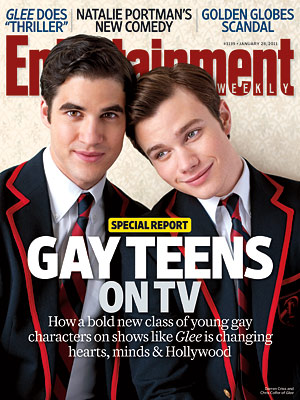
When I came out of the closet, I had to accept the fact that I would never have a family of my own.  That was in 1998. Matthew Shepard’s violent murder and the cancellation of ABC’s Ellen were hot topics in LGBT current events. The U.S. was at a turbulent crossroad with sexual orientation, and many of us who were grappling with burgeoning identities got caught in the crossfire of a culture war. My fifteen-year old self couldn’t fathom that a little over a decade later, states would be legalizing same-sex marriage and gay teens would be prancing in primetime on Fox’s Glee.

A quiet turning point has lead to the acceptance of a new reality. I’m not alone in being on the frayed edge of that promise, though. It’s easy to be cynical about something you believe you’ll never get to have. Odd as it might sound today, coming out in yesteryears meant embracing the truth of who you are while simultaneously acknowledging that society wasn’t quite ready to make room for you.  Many of us have developed hard shells and postured masterful defense mechanisms as a result. Ever wonder why gays are prone to higher rates of drug use, eating disorders, smoking, and alcoholism?  It’s not because we’ve been lacking a moral compass; it’s because this mortal world has been lacking a place for us.

Today, coming out of the closet means coming in to a new world of possibility. Even in places like Kansas, where gay rights remain elusive, there’s room for we homos on this range. Go to the Riverside Perk on any weekend night and you’ll see a familiar site—giddy teenagers on double dates listening to live music  at their favorite local coffee shop. Except now, it’s pretty commonplace to see a doe-eyed male-female couple accompanied by a buoyant boy-boy date, listening to a just-out-of-high school lesbian strum her guitar, singing sugary ballads about her girlfriend. The heated rhetoric and bombastic politics boil down to something so innocent and so simple.

There’s something therapeutic about being in the company of such unfettered optimism. Life is far from unproblematic for the gay youth of today, but it’s also not unpromising. And those promises that this quiet revolution has delivered aren’t out of grasp for those of us who are older. The shadows of our tattered past don’t have to dictate the realities of our lives today. We paved this road. This is our solstice. Now let’s walk on it and enjoy the view!

Mark Zuckerberg: Gay Rights Icon?

Zucks

Sure he's an accidental billionaire, but is he also a surreptitious same-sex savior?

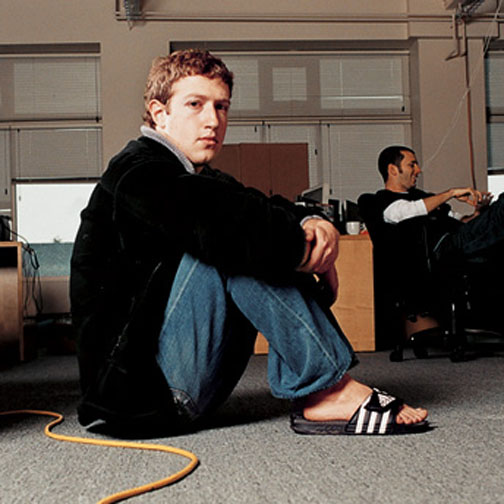
Mark Zuckerberg is not just an accidental billionaire; Facebook’s founder is also a fortuitous gay rights pioneer. Though neither queer by orientation nor activist by nature, the creation of his social network has forever change the means by which homos, on and off the range, negotiate the terms of their lives. His digital quest for openness has picked the locks of closet doors for the last half-decade. In connecting the globe, he has enhanced the ability of LGBT individuals to connect to each other and reconnect with the world around them. Facebook’s impact on the gay movement is palpable on a personal and political level.

Social media has changed the terms by which gay romancing is negotiated. The chat rooms and message boards of the 1990’s gave rise to an over-sexualized hook-up culture. Those looking for mates could find their fantasy man or woman online via Gay.com or CraigsList.org. There were lots of awkward dates and one-night stands, but little lasting or meaningful encounters. That is because the mediums delivering the connections were devoid of the one essential ingredient for any kind of successful relationship—authenticity.  With Facebook, you are your imperfect, fully integrated self, and you are not hooking up with a random stranger. You are usually connecting with someone you already know. Thanks to that “Interested In” tab, you identify how well they might want to get to know you!

Ten years ago, it was fairly easy for gay people to live compartmentalized lives. Many of us were out to our friends, but perhaps not to our family or colleagues. With news feeds, relationship statuses, and photo tags, social media makes it pretty hard to hide the truth. As our aunts, fathers, and grandmothers become our Facebook friends, they are learning that a digital connection is also a holistic association.  No longer are we able to easily pick the parts of people we love. When you see a person’s whole life reflected onto a computer screen, you understand that it is the sum all their interests, likes, and activities that make them who they are.  Sure, privacy settings can safeguard you to some extent, but the genie is really out of the bottle; new media makes it very difficult to cling to old ideologies like “don’t ask, don’t tell” because it is an invitation to the world—or at least your world—to be told all about YOU. That is forcing significant progress in areas outside of our personal lives.

There is a reason that gays are now integrated into the military. Nearly eight in ten Americans believe that the ban on openly gay service members was unfair. That is a dramatic reversal from when the policy was adopted only eighteen years ago. The simple fact is that when people know someone who is gay, they begin to change their minds about gay rights. The issue becomes less political and more personal. People of all political persuasions have Facebook accounts, and they see happy pictures of their niece and her girlfriend on vacation and festive photos of their son and his husband decorating the Christmas tree. Polls begin to reflect this accepting sentiment; politicians always follow popular opinion. In twenty years when same-sex relationships are commonplace, it is Zuck we should be toasting at our weddings!

I doubt Mark Zuckerberg has ever fancied himself a gay liberation icon. Anyone who traverses so boldly across the frontier of openness, though, cannot escape the simple fact that when you open a digital window into people’s lives, you forever change the quality of life for those who had previously

Gay Church

Every group of people has shadows that need to be shaken. For gay men, we’re often a bunch notoriously obsessed with our looks. Centuries of social isolation have given rise to plastic airs even our own kind have difficulties keeping up with. Human behavior can only be understood when the complexities of the layers beneath the surface are examined.  Identity is a myriad of personal circumstances. The gay experience is best viewed through a rainbow lens.

There’s an old adage in homo-culture that states “the gym is gay church”. While it’s a tongue-in-cheek statement, it’s also darkly ironic. There’s an expectation in gay male culture that bodies be slim, trim, and spryly sculpted. I know many who spend hours a day working out to obtain an Adonis-like physique. Eating disorders are rather normalized among many same-sex peer groups. When my chunky 15 year-old self came out of the closet in high school, I was quickly informed by a classmate that I couldn’t really be a homosexual. The reason? Well, you have to be hot to be gay! Thankfully, human sexuality is much more nimble than tepid social illusions!

That remark haunted me for years, though, and the allure of Adonis remains a dank cloud over the gay community. To get to the core of this complex, we have to dig beneath its plastic exterior.  It’s easy to make our bodies a sanctuary when we’ve been driven from our own houses of worship. Churches, mosques, and synagogues are where many find comfort, but many times it’s religion that begins the self-loathing process. When you “love the sinner, but hate the sin”, there’s a transfer of negative energy that can have dire consequences.  Hate becomes the operative word, and often we go to war with our bodies as a result of other people’s uncomfortability with our presence. We can’t make people change, but we can change ourselves. Let’s face it; it’s a lot easier to lose weight than it is to work through deep-seeded emotional pain!

Rejection isn’t always synonymous with religion, though. Many times it’s just plain ignorance that drives a wedge between gays and their friends and family. Sure, we’re making progress. With alarming stories of gay kids offing themselves, though, we obviously aren’t close to the end of this journey to acceptance. It’s easy to outcast people who aren’t like us. It’s also easy to forget how truly isolating it can feel at times to be gay. Well-meaning hetero-pals usually aren’t aware how lonely it can feel to only have a highly reduced chance of meeting someone who shares your sexual orientation.  In the Midwest, where urban migration moves many gays away and the closet locks many more inside, that feeling is intensified. When we spend too much of our time building lean muscle mass, we aren’t spending enough of our time bridging gaps in understanding. We let ourselves believe that a svet physique is the only ticket to companionship. We pursue perfection to escape isolation.

It’s a problem when developing your personality takes a back seat to mounting a six-pack. It’s your aura that draws people in, not the size of your waist. That famous gay rainbow is supposed to symbolize the diversity within our community, and we have a menagerie of body types. Body image issues plague people of all sexual orientations. Let’s melt the plastic and get to the point!


Everywhere to Go

ImageThere’s no one to hear; You might as well scream; They never woke up; From the American dream
And they don’t understand; What they don’t see; And they look through you ;And they look past me
Oh, you and I dancing slow; And we got nowhere to go

Those are the words that Kansas native Melissa Etheridge used to describe what it meant to be a homo on the range circa 1995. The straights probably don’t realize that the hit love song, Nowhere to Go, is actually a forlorn ballad detailing the dichotomy of queer love in the Midwest. We could find shelter in the arms of our lovers, but in the decades preceding this song, being embraced by the masses was eluded.  Generations of our “forequeers” literally had no where they could go and completely be themselves. They kept their love a secret and they muted their identities. Clandestine encounters in old abandoned box cars were about as public as it got in many places.

Fifteen years later, I’m happy to say that homos are a bit more free-range! As people like Etheridge started coming out in the mid-nineties, Americans gradually did wake up from their limited idea of the American dream. A whole generation is now living with the understanding of something they saw during their development—same sex love. Grassroots activism, political victories, and legal battles helped pave the way for a more inclusive America. But it was the personal courage of each individual who came out and demanded to be heard that really caused change to happen. Suddenly, we in the LGBT community have lots of places we can go!

And that’s part of why I ultimately pulled the plug on my city council campaign.  When I came out in 1998, we lived in a mush harsher world. I was keenly aware that my level of personal joy would be depleted on account of the legal status and social standing afforded to gays and lesbians. Political involvement felt like a necessity for personal survival. For ten years, I was on the front lines as an activist. It was non-stop, high stress work that left little time for a personal life. Gay was a political identity for me; I have yet to actually experience same-sex love.

Life is short, and sexual politics aside, you should enjoy every minute of it. Often times we get involved in activities that bring us a sense of purpose and great joy for a season. Ultimately, though, a full life will involve changes in passions, places, and people. When something you are doing ceases to bring you joy, you owe it to yourself and those around you to stop. Politics became an immense burden for me some time ago, but out of a sense of obligation, I persevered. It would have been remarkable to be the first openly gay man elected to major public office in the state of Kansas. More awesome, though, is the fact that in 2010, I have the ability to choose my own happiness.

It’s important to be involved in politics—if you have any inkling to get involved in activism, I urge you to act on that. Giant steps backward can and will be taken if we are not vigilant. But the moment your passion subsides, step aside for the next individual. I won’t be the first openly gay person to sit on the Wichita City Council, but now the door is open for someone else to take that seat. Maybe that someone is you.

Fifteen years after Etheridge romanticized there being nowhere to go, we have a boundless prairie of opportunities. Queer Kansas can go anywhere. Wherever you go, though, always follow your heart. Being true to you is pretty damn revolutionary!

Flux of a Movement

There’s a moment captured on film that simply, yet perfectly shows the flux of shifting attitudes about gays and lesbians. This summer’s much-hyped The Kids are Alright showcases the joys, trials, complexities, and simplicities of raising a family in modern America. When the family’s teenage son realizes his moms are going to stay together despite a rocky period in their relationship, he cracks a satisfied smile. Nodding with approval over their decision to remain a couple, MGMT’s “The Youth” is queued. Audiences understand that the kids of same-sex couples ARE alright.

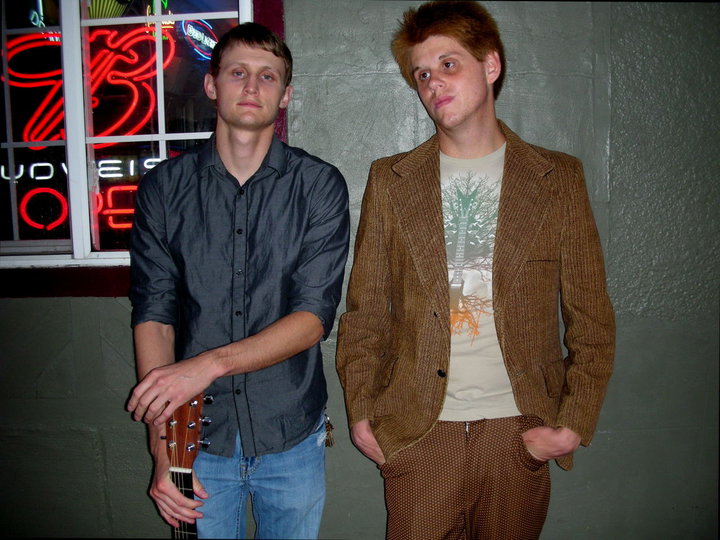
Gay/Straight Alliance-me with ICT musician Justin France (photo by David Quick)

The youth, indeed, are starting to change! But that change is recent, and the future is still very much in flux.

It’s no secret that over the past decade, a cultural shift has taken place among the millennium generation that has lead to an overall change in attitudes toward gay people.  Most under the age of 35 view their LGBT peers as equals. They see their same sex relationships as being on par with their own hetero-romances.  Polling data shows that nearly 2/3 of young adults support gay marriage, but this social transition is much deeper than any poll could ever pronounce.  At the time of this writing, the U.S. Senate has failed to repeal “Don’t Ask, Don’t Tell” and Proposition 8 remains on stay in California; gays remain barred from both military and matrimony.  Yet, something progressive is afoot in the culture. As I write, I wait for musician Justin France to join me for dinner. He’s a 26 year old straight man, and fast becoming one of my closest personal friends.  This gay/straight alliance is a pairing that is not so uncommon anymore.

It turns out that social barriers, not legal hurdles, were the most significant change to unfold for gay people during the 2000’s. No longer relegated to socializing solely in bars with other gays, we were able to form real friendships with straight men and women, integrating into the culture at-large.  That’s what happens when closet doors open. We end up in a post-Will & Grace world where we can be whole people instead of just gay people. How many of you who are heterosexual have a dear friend of another orientation whom you can’t imagine not having in your life? Your life, too, would be different without this social flux!

A flux is a precursor to change, and while socially we’ve made progress, legally we lag behind.  The kids are alright until tragedy puts their family in limbo. With most states not giving any legal recognition to same-sex couples, the death of one mom doesn’t always mean the surviving parent will get custody. The youth have to make change happen. Telling a pollster you support gay marriage and then going to get a drink with your gay best friend is great, but it’s not enough to ensure that this flux gives way to a permanent state of fairness.

You have to vote, advocate, and demand. And then vote again! If we do, this generation can finish the change!

Previous Older Entries Next Newer Entries