Pin Up Sexuality

ImageYou can’t quite pin a person’s sexuality to a wall. Sure, you can produce alluring images that reflect a sexual act. You can create art that is titillating.  But you can never capture the true essence of a single person’s complex socio-sexual horizon by freezing it in time.

There’s an element of “pin-up” sexuality that permeates the gay community, and it’s particularly perplexing here on the range. We often turn to pornography or online hook-ups to satisfy our sexual appetites because the inherent isolation that comes with being gay in a place like Kansas leaves few choices for healthier outlets. We rarely talk about it, but those of us in the LGBT community have gotten used to our sexualities being highly compartmentalized. As a result, the sexual relationships we form are frequently fragmented or underdeveloped.

Before I lose you hetero-readers to the “ick factor” of having to think about gay sex, let me remind you that we homos have to stomach more than our fair share of opposite-sexing. Sexual health is part of a community’s vitality, so anyone who cares about living in a wholesome world should be interested in this “pink pin-up problem”. Open your minds a bit and you’ll see this issue is more about sociology than it is sin.

Today, we can get off by cueing up our smart phones. Access to sexual imagery has never been easier. When you’re formulating a sense of your own sexual identity, there really is no digital Pandora’s box. There’s so much more to one’s sexuality and sexual orientation that the carnal act of sex, though. Within that truth, a tangled problem tangoes.

Gay people often see themselves represented for the first time in a porno. That’s a jarring statement that deserves some consideration.

If you are heterosexual, when did you first see another person emulate your sexual essence? If you had straight parents, it was the moment you were born. If you didn’t, I’m sure it was only a few minutes after that! We live in a heterosexual society. We’re saturated with boy-girl narratives in all elements of popular culture. Movies, books, and songs are full of opposite-sex tales. We form our identities, in part, by associating ourselves with representations of who we can become. We color our lives with the paints of others. Our sexuality is one of many elements to who we are, but what happens when there are few representations to draw from?

We want so desperately to know we aren’t alone; to be reassured that we aren’t the only one. That means we’ll go anywhere to find ourselves.

The consequences are complex. Pornographic images produce unrealistic expectations about body image and sexual pleasure. They’re devoid of humanism, making sex a solo activity, and later sexual encounters potentially awkward. Porn is also exclusively focused on sex as a corporal act. To be truly sexual, one has to bring their whole self to their partner. Spirituality, intellect, and sociability matter to LGBT people, too.

It’s easy to “pin up” our sex lives, though.  There aren’t many places outside of clubs or bars to meet gay people in this town. A holistic community is still very much in formation. In the mean time, a lot of us are bumping into each other on Grindr or conversing via Craig’s List. No one teaches you how to be intimate with a person of the same-sex. Even the most supportive of parents probably don’t know how to talk to their gay kids about how to form an appropriate relationship. There’s that “ick factor” again. It’s uncomfortable, so we avoid it. Can we afford to ignore the health problems that it parallels, though? AIDS hasn’t been eliminated. People still get infected with HIV. STDs happen. Beyond the body, though, there’s the soul. We all deserve more than a social media dating app profile.

There are more positive LGBT representations now than ever before in the media, but what about our local community? Celebrities have marginal impact on forming our identities; it’s the people in our daily lives that make indelible imprints. Coming out is a public health issue. Don’t fool yourself into thinking a lack of gay representation will lessen the chance that your kid will be gay. We homos don’t have much choice in the matter. The choice is in how we all live our lives. If you’re straight, encourage your gay friends to talk to you about their dating life. Try to help them out if they’re alone by introducing them to new people. Check in your “inner-ick” at the door. Don’t let someone you care about compartmentalize an important aspect of his or her life.

Let’s stop pinning up our sexuality and start owning up to the wholeness of who we are.

Flyover Frustration

Image“It’s so frustrating living in Wichita!”

That’s the message a friend tweeted me on a Friday night. I knew exactly what she meant without even having to ask.  A forty-something successful attorney, she was fed up with being culturally sidelined. It’s a perplexing phenomenon gay professionals often feel in smaller cities like The ICT.

“Nothing happens here. Nothing ever happens here. I can watch the same ten girls get drunk at the same gay bar or go to a dance club that plays bad music and pretend to be overjoyed that my hetero friends are getting married,” she bemoaned. “Meanwhile, I’m just stuck. I’m not happy. Just stuck”

I empathized enormously. Her words have resonance. There’s a problem in this city that doesn’t quite have a name. It’s the gut-level unsatisfaction many LGBT people feel. It has nothing to do with our sexual identity or self-acceptance. It has everything to do with where we fit into the fabric of the community. That restlessness is intrinsic with being a queer Kansan. It’s the central challenge to being a homo on the range.

It’s “flyover frustration” and it’s an issue as vast as the land size of Kansas itself. Our state’s regressive political climate does much to drive away talent. However, the real challenge to being gay in a place like Kansas isn’t political. It’s very personal, and it’s downright detaching.

Most would probably assume that it isn’t easy being gay in the Midwest. The reasons for why, though, are perhaps not so obvious. To comprehend the difficulty of being gay in a city like Wichita, you have to dissect the factors behind the colloquial culture as well as understand the dynamics of the LGBT community. That’s a tall, perplexing task!  Yet, it’s central to my friend’s vexation.

Folks unfamiliar with flyover land living are left to learn about life in the heartland from outside sources. They see images in newspapers of hatemongering preachers picketing funerals of anyone who has ever seen or heard of a gay person. They watch coverage on cable news of abortion providers being shot in the head at church. They read blogs about lawmakers (from the Democratic Party, no less!) insisting that sodomy laws be kept on the books. The image that gets painted of Kansas is one that is colored by hatred, violence, and blatant discrimination.

Those aren’t the true colors of our rainbow, though. The hues are more somber grey than they are angry red. Being a homo on the range doesn’t just mean that you are a target for the right wing.  It means you have to get very good at living alone if you want to survive.

Most people like a life full of connections, though. For that reason, it’s common for gay kids who grow up in Wichita to have an escape plan. They flee for the bigger cities because of the promise those bastions hold for enhanced encounters with people who are like them.  LGBTs lean more toward being inventive, creative, and dynamic. We’re a resourceful people. We tend to enter into industries that engage our more imaginative instincts. We survive as a community by thriving as individuals. Art and culture are our lifeblood. Activity is our anthem. Entertainment is out ethos. Progress and innovation propel us forward. When we find ourselves in the midst of manufacturing economies with limited growth potential and living in towns where cultural and economic progress are stalled, we tend to want out.

And often, we do get out.

Sometimes, though, we stay. We stay for our families. We stay because we have a job. We stay because it’s an affordable place to live. We stay because we don’t want to be forced to leave. When we stay, we often find ourselves standing alone. On a Friday night, while our metro friends are taking in edgy plays and dining at fusion restaurants, we’re sidelined, left only to tweet away our frustrations.

Isolation is a feeling familiar to most LGBT people. At some point, all of us have felt deviant, different, and disconnected from those who surround us. That’s not exclusive to the gay experience; most have felt sequestered at some point in life. What is divergent, though, is how this unfolds. It’s not as though being gay in Kansas means you won’t have any friends or never have a lover. Wichita is not the stereotype most assume. Yes, the politics here suck! Yes, the political climate contributes to larger choices. Yet, while political battles are important, private circumstances are paramount for most folks.

One can be denied the lawful right to marry, but have the happiest of same-sex partnerships. My friends Dusty and John have been together for nearly 30 years and have a happy home with a beautiful back porch garden in southeast Wichita. They have no legal rights, but lots of love shared between the two of them. It can be perfectly legal to be fired from a job because of your sexual orientation, but absolutely possible to find a place of employment with progressive-minded colleagues and supervisors who value fairness. My friend Jayson manages a Target store on the east side of town. The fact that he has a boyfriend has never inhibited his ability to quickly move up within the company. Bigots can live among us, but hate crimes tend to be the exception rather than the norm. When my friend Dan Manning had a death threat mailed to him during his run for a state legislative seat in northwest Wichita, the shock and outrage from the community was unparalleled. Kansans aren’t accustomed to political intimidation via bullets–even when the candidate is openly gay!

All of these friends were able to carve out happy, successful lives in Wichita. Yet, most of them would admit that there’s still something missing. Migration is a large part of the problem. Just enough gay people leave the city to drastically alter the quality of selection of potential romantic partners (and even friends); yet, just enough of us choose to stay to continue the presence of a small, seemingly burgeoning gay community.

Sadly, burgeoning has never quite blossomed. Go to any gay club or pride event and you’ll see the same people year after year. Most of us are delightful individuals, but there’s never a cycling in of fresh faces to enhance our charm. There are never quite enough people for us to find a lasting group of friends we belong to, let alone a lover we truly connect with.

New influences keep us from falling into old patterns. A part of you blooms that was never alive before each time you make a new friend. Flyover frustration unfolds each time vibrant individuals get stymied by the lack of growth a community offers them.

It happens far too often in Wichita. It dampens the spirit not only of my frustrated tweeting friend, but the spirits of all of us who choose to stay and try to make a city with so much potential our home.

I’d like to say that the solution is to stay and be the change that we need. If more of us stayed in-mass, this issue would resolve itself naturally. I’ve realized, though, that one person’s decision to stay won’t effect change fast enough for that individual to live the life they deserve. We homos who live on the range have a complicated relationship with our land. We love it for its enormous prospects; we resent it when it robs us of our vast potential.

No dynamic individual should ever be left with a twittering blue bird as their sole friend on a Friday night! Getting to the root of “flyover frustration” is a step toward all of us being able to find our own eventual happiness—on or off the range.

Mine the Void. Fill the Chasm.

When we go to a bar, we have an agenda. Refreshing, tasty beverages are not what most of us seek when we walk into our favorite watering holes. There is no natural lust for alcohol that beckons us to imbibe. There is, however, a yearning for connection imbued in each of us. We buy drinks, dance with strangers, and take random people home in hopes of filling a void. We believe others will give us what we cannot give ourselves.  We are always disappointed.

You do not have to be gay to have this experience. For people who are, though, the emotions are compounded.  We are not just looking for a partner when we intimately connect with someone of the same sex; we are often trying to find ourselves inside another person. No one really knows what it means to be “gay”; we hope to find another person who can teach us, though. That dynamic is an equation for ascertaining emptiness.

There is no greater catastrophe than a life unfulfilled. Yet, most would admit that something is missing. Every person who is gay has experienced some kind of rejection; we seek shelter in the arms of others. Intimacy cannot be manufactured, though. It cannot be found on Craig’s List. It cannot be ordered up on smart phone aps. It also cannot be served at a bar. That gut-level unsatisfaction so many of us feel everyday is really an imbedded barometer reminding us that we need to get our internal house in order. And so, we try.

We are sitting at a coffee shop on a Saturday afternoon, the latest issue of The Advocate our only companion.  We feel lonely. We want to be connected. So we pull out our iPhone and log onto Grindr! The gay-dating cell phone application displays diagonal rows of dozens of men within a few thousand feet from us who we can talk to. We zero in on a shirtless guy with scant information about himself in his profile. We chat it up.

We decide during the nascent texting/dating ritual that this avatar will be our salvation. The shirtless man behind the pic will fill our void. He will see the beauty of our soul. He will love our quirky tastes, laugh at our jokes, and explore the world endlessly by our side. He will give us everything we deserve.

None of that is apparent by the few dozen lines of text we exchange, though. We decide to meet up at a downtown bar later that evening. In the flesh, it will click.

So we enter the bar with an agenda. We fail to consider that we are about to meet a distinct person with a whole host of issues and aspirations distinct from our own. We meet. We order a drink. Shirtless Grindr guy turns out to be pretty lackluster. He is rather boring. We have little to talk about. Or maybe we do. It is hard to have a real conversation with someone when you are holding at bay the disappointment that this person is not exactly who you wanted them to be.

Now, we have a choice. We can politely excuse ourselves and go home to a lonely night’s slumber. Or, we can invite our bland beau to our abode. The night’s machinations can either be tame or wild; the morning’s musings are pre-ordained. Either way, he leaves. The chasm remains.

It is within that space—that void—that redemption lives. The awkward moment when we realize the person we are drinking with is not the person we want is really the instant when we discover that pieces of us are missing.  We can wander the world, cruise every bar, and chat up every person in cyber space. No one we encounter will ever be able to give us what we have to give ourselves. Instead of going to out bars, we should probably be doing yoga, meditating, or just spending some quiet time reflecting on how to become the people we want to be.

When we do meet up with people, we should interrupt that awkwardness with something real. We should not be afraid to embrace the uniqueness that lies within. We should share ourselves with the people we find in front of us. We should receive individuals as they are. Our own agendas must be set aside. People are not canvasses for us to paint our insecurities onto. Everyone is their own masterpiece, worthy of faculty and symposium. Ultimately, we must fill our own gap. Only then can we receive the light of others.

This is not just a gay issue. Heterosexuals manufacture intimacy, too…and in greater numbers! There is a certain politeness in straight society that prevents the honest admission of what is really going on in most people’s lives, though. Leave it to the gays to shake things up a bit.

Let’s all try to fill our inner-chasms with more than just alcohol. Let’s stop looking for other people to make us whole. Let’s dig deep into our own firmaments. We can fill the void by mining the chasm.

Mind the Foxes

Image“There’s a fox in my backyard.”

That was the simplistic picture message Odin sent me on a winter afternoon. His random text was accompanied by an image of whitewashed woodland. A little red creature darted across the snowy terrain. Its bushy tail dusted a trail as he ran.

Initially, I was perplexed by the message’s random nature. Later, its profound depth entranced me.  It took a tragedy to shake meaning out of meagerness; Odin died unexpectedly a few months later.  He bequeathed me a fascination with all things foxy.

The occasional apocalypse is necessary for the long-term evolution of the soul. Old habits, aged ideologies, and outdated practices have to be destroyed so that the individual can survive in an evolving world. Sometimes, it is not just a Phoenix that rises from the ashes. There are moments when we must mind the fox.

Odin’s fox was going somewhere; he was on a mission. The where and why were irrelevant. It was only the advent of his interloping that mattered in that moment.

Odin saw what others missed. Maybe that is the up side to having a disordered personality. The frame of his mind minded not the fences we tend to put around ourselves. In a smart-phone society, we lose focus on what is in front of us. If it is not on Facebook, we do not know about it. If it is not in our iCal, we are not there.  Most of our actions are premeditated; much of our existence is preordained by the rigid schedule we box ourselves into. We get so consumed by the details of our life that we often forget to live. We miss the foxes in our own backyard.

And sometimes, we forget about the foxes in our bedrooms! Odin’s message reminded me that I had a fuzzy creature in my own midst.

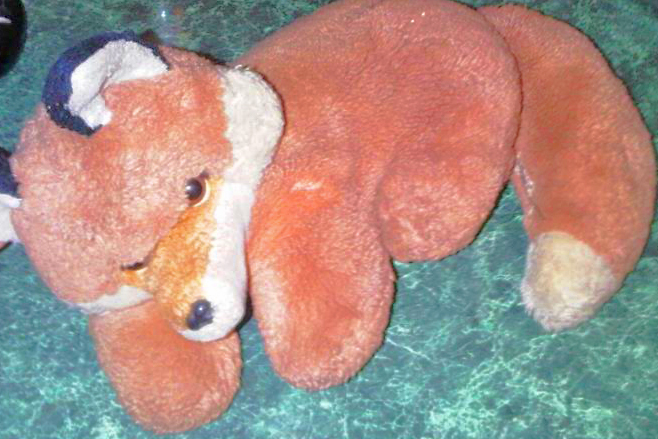
His name was Victor. He was an unassuming, fluffy toy-animal. My parents gave him to me on my fifth birthday. I vividly remember unwrapping a round, red box and finding a furry, stuffed creature snuggled inside. When my eyes met his synthetic gaze, I knew we would be companions for life.

“I want Victor to be my friend when I’m 100 years old!” I exclaimed. “We’ll go everywhere together.”

We did. That day, we went camping by a lake in Ohio with my mom and dad. A few months later, we ventured to Arizona and explored deserts with my grandparents. Later, we moved to North Carolina. We explored the kudzu-laden woods of “Tarheel Land” as I pretended to be the Nintendo hero Link, on a mission to save Princess Zelda. We went to Myrtle Beach with my aunts every spring. We visited my cousin in the mountains of West Virginia every summer. We really did go everywhere together.

As I got older, I stopped impersonating video game heroes; I also stopped playing with my toy fox.  Life changed. My parents divorced. I moved to Kansas with my mom. I came out of the closet. I went to college. I ran for office. There really was no constant to weave together my disjointed life; none but a furry fox named Victor.

Though he had always been a fixture in every bedroom I have inhabited, I somehow forgot about him. Odin’s picture message jolted my brain. I called him up and exclaimed proudly that while he had a fox in his backyard, I had a fox inside my apartment. Odin was captivated when I sent him my own fox pic.

“Why didn’t you ever tell me about Victor?” he asked. “We’ve talked all these years and finally I’m impressed by something of yours! Send me one picture of him every day for a month.”

It took a lot to impress Odin.  Throughout our relationship, I tried in vain to astonish him with my arty lifestyle, political career, menagerie of friends, and zest for exotic food. The things I thought I loved always annoyed him. We found our common denominator in a fox.

For a month, I sent him a picture of Victor posed in different places, behind unique paintings, and with blends of various people. Each photo was an opportunity for us to connect. He listened with interest when I filled in the details of where and with whom Victor was socializing each day. Eventually, that led to me telling him about all the places Victor had been over the years and about all of the very real events he had seen unfold before his plastic eyes.

Victor saw my dad throw my mom onto her bed and force himself inside her when she refused to take him back after their separation.  He saw me cry when my friend Glenn told me we could no longer talk because I was not a good Christian anymore. Victor saw the joy on my face when my best friend Mary moved to Kansas to live with me. He saw the pain in my eyes when she left to marry a guy she had only know for a few months. Victor’s fur was splashed with champagne the night Democrats regained control of Congress in 2006; his fuzzy façade was bathed in tears the night I pulled the plug on my own political career by dropping out of the city council race.

Maybe my life was not so disjointed after all. The more I talked about what Victor had seen, the more I began to realize that it was really just one big fox trot!

The more of Victor’s visions I shared, the more of Odin’s adventures I became privy to.

“Victor shouldn’t have to just see your life,” Odin announced one night. “So, I guess I’ll have to tell him a little about mine. Put him on the phone. I guess you can listen, too”

Every night, Odin would call with a different story to tell Victor. I grabbed the fox, and sat him and my Blackberry on my lap. We listened intensely as Odin’s voice penetrated the speakerphone. He told Victor about the time his father threw him out of their house and into the cold street because he could not memorize a section of the Koran at the age of five. He related the pain he felt when most of his family disowned him for being gay. He cried a little bit when he recalled being banished from his mosque at fifteen. He regaled the exploits of living for a happy summer in New York City. He remarked that Obama’s election brought him hope that we would one day live in a pluralistic society. He talked openly about the anguish his muddled mind brought to him.  He wished out loud that his personality was not so disordered.  He admitted that he craved connection and belonging; he was raw, vulnerable, and bare in enumerating his yearnings. He bemoaned that he had one too many strikes against him to ever be happy.

Eventually, Odin and I were talking beyond the fox. We were communicating with each other. We came to know, understand, and love deeply. We were men having an incorporeal connection; I never knew a plush toy could be so therapeutic.

I also did not understand the relevance of what was happening. I was too busy living the many motions of my life to fully grasp what those foxes—one alive, one fake—were trying to show me. There was something about the construct of Odin’s mind that disallowed the rudimentary to take root too deeply. He saw the understated, simple things. To him, the artless was an advent.

Odin’s untimely death was the personal apocalypse that opened up my eyes. It took the passing of one life to allow mine to move forward in a different way. Just like the fox in his backyard, Odin, too, was on a mission. His sojourn in this world ended all to soon. What he left behind is all too apparent.

Now, I mind the foxes in my own backyard. I seek out forgotten confidantes. I try to focus more on the simple beauty in front of me and less on the noisy distractions that abound. In doing this, I have become illuminated by the majesty that surrounds my ever evolving life.

Solo-Sex Marriage

Image

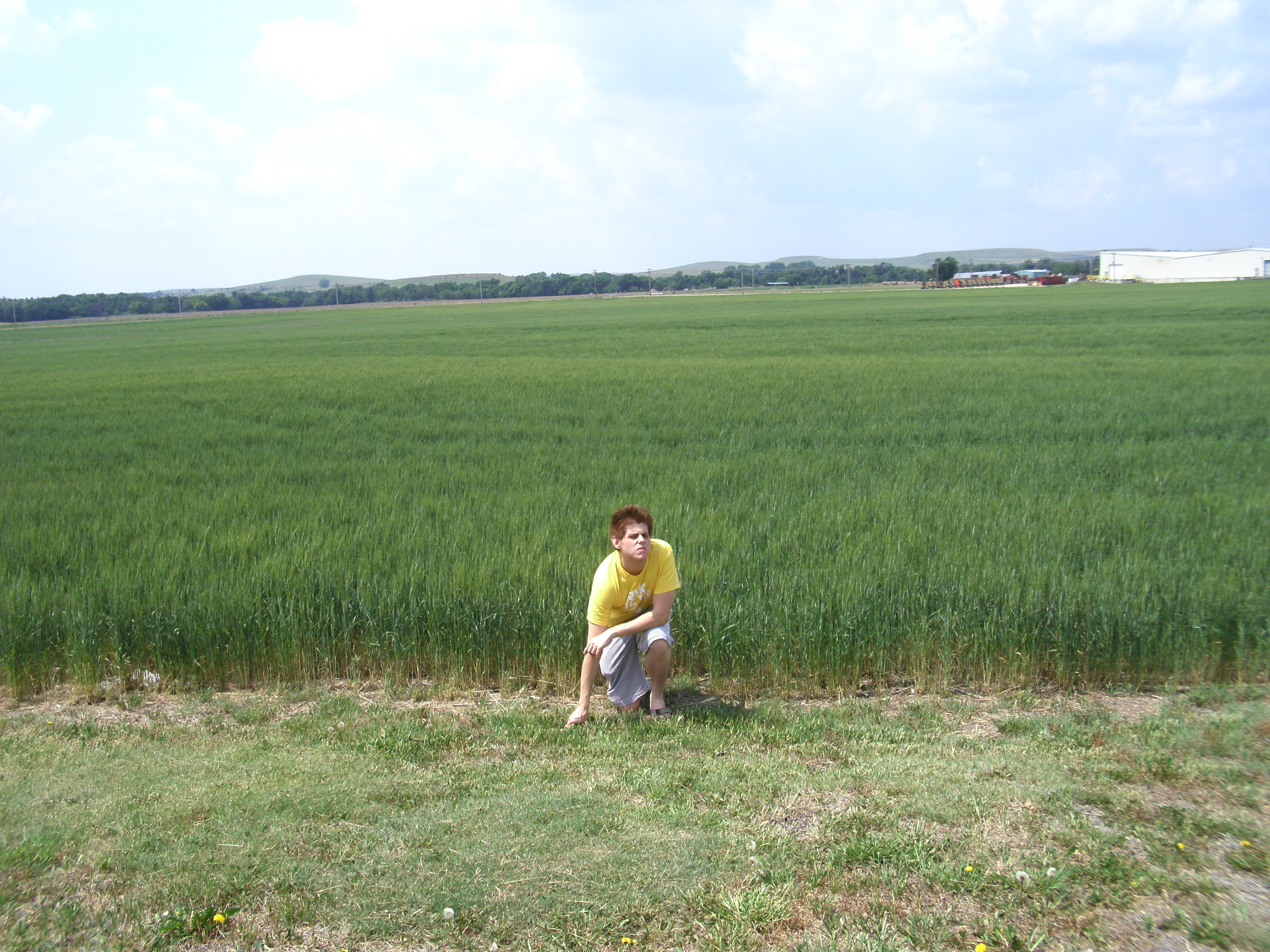
Wide open spaces.

Life on the range opens us up to possibilities as vast as the flat land before our eyes. Those prospects can take us beyond tradition and to a deeper place. Sometimes, we find ourselves outside of our safety zones and in uncharted territory. When we do, when we must become our own trailblazer.

That’s what I have learned as a gay man living in Kansas who has always been single. Yes, in my almost 30 years of life, I have never had one real relationship. I’ve had to invent the rules as life happens. I live alone, creating myself as each day unfolds. Most people find it perplexing that an educated, dynamic, and well-regarded person would be met with such circumstance. Indeed, my chronic solo condition used to cause me great pain.

Then I got to thinking about exactly where it is I choose to live…

Wichita is a great place to raise a family. The city offers a very affordable, high standard of living. There are lots of big houses on large lots to rent or buy at relatively low prices. We have quality schools to educate kids. We have strong neighborhoods to give families support. We have vast amounts of churches to enhance spiritual and community growth. Generally, a slower pace and calmer way of living makes it a relaxed spot to settle into married life.

Not everyone chooses that lifestyle, though; and that’s not just because of sexual orientation!

A growing number of folks are eschewing traditional family life altogether. More and more, people are choosing to either defer marriage until later in life or forgo the concept entirely. Those who are single and remain in The ICT are finding themselves on the “family-friendly fringe.” We who are single and gay…well, let’s just say it isn’t same-sex nuptials we’re concerned with. For us, it’s a daily struggle to find contentment living in a solo-sex marriage.

LGBT individuals generally don’t feel the same familial and societal pressures to partner and reproduce that our heterosexual friends do. This leaves us plenty of space to build our own lives and forge meaningful friendships. That doesn’t mean we’re devoid of devotion, though. To live alone for the long haul is just as much a commitment to one’s self as a marriage is a solemn promise to another person.

There’s a lot of inherent joy that comes with simultaneously being gay and single. There’s a matchless air of freedom inherent with knowing you never have to legally be bound to someone else. You can eat anywhere you want to for dinner. You can go out to any club you like. You can take up whatever hobby interests you. You can travel anywhere in the world. No one else’s feelings have to be considered as you explore the depths of who you are.

Yet a solo-sex marriage is actually quite the polyamorous affair. When your focus isn’t just on one person, you have the ability to invest in lots of people. For me, that’s meant building some very meaningful friendships, the depths of which transcend the layers of many legal marriages. I know more about my best friend Mary than most husbands do their wives. I’ve connected with my friend Trishna on a deeper emotional level than a lot of boyfriends will ever connect with their girlfriend. I’ve had more fun dancing at loft parties with my friend Lynette than I probably would have had grinding on any guy I’ve ever been interested in dating. In all of my relationships, I’ve invested part of myself in another person and gotten a piece of me reflected in their eyes.

In cities like Wichita, though, unconventional joys can only last so long before tradition takes root. Most of my really good friends have moved away because, while Wichita is a great place to raise a family, it’s not a good place to be single. That’s especially true if you are looking for a mate. Sperling’s Best Places rated us the #2 worst city for dating in 2011. In 2004, another study had us at #3; we increased, but this is not a list on which you want your rank to rise! People who are raised in Wichita are all too aware of the realities behind the numbers. They often move on to greener pastures, off the range.

Though there are many joys that come with being partner-free, no person wants to be devoid of connections altogether. Most of us want a life full of friends. Many of us want to experience love at least once. I’ve gotten to know myself quite well as I’ve lived in my solo-sex marriage on the range for the entirety of my twenties. When I’m not connected with friends and not sharing my daily life with other people, though, I feel as though the sum of me is lost. I develop by allowing parts of others to fertilize shares of myself. Left alone too long, I can feel a withering away of my best parts. I know the years by recounting the people who shared them with me. It’s good to be alone so that you can truly know yourself; but you must also live among so that you can share that self-cultivation.

I’ve come to the unfortunate conclusion that, while the prairie lands of Kansas hold vast potential for shaping an unassailable sense of self, lasting connections with others will have to be explored off the range. Wichita has been a great place for me to find myself, but as I embrace the person I’ve uncovered I know I’ll have to go elsewhere to fully share him. I’m not alone in this line of reasoning. This is the heart of the city’s “Brain Drain” problem that sewers away young talent. It’s also the central point of the simultaneous “gay-away” that chases off our LGBT occupants.

Having to choose between one’s self and one’s home is unfortunate. The beauty of Kansas, though, isn’t just the enormity of its land; it’s the profoundness of the people the land shapes.  The real home on the range is the home one finds within. Maybe this land was settled so that people could come here to know themselves first, then then blaze trails elsewhere with others by their side later. If so, everyone should have a Kansas sojourn.

The Gay Gap: A Taboo Tangoed

Image

Lt. Dan Choi and Dan Manning march in Wichita Pride Parade. Both were discharged under DADT. (photo by David Quick)

The first time I heard the word “gay” was in 1993. Bill Clinton was our new President, and gays in the military was among the first major issues his administration was tackling. I was 10 years old. One Sunday morning, after reading about Clinton’s proposal to allow open service, my dad commented to my mom that gay people were going to destroy the military. Clinton, he said, would be to blame when our country was no longer able to defend itself against foreign invaders after our troops fled their posts to avoid the gays.

Whoever these “gays” were, they sounded pretty bad!

When I asked my parents to explain, I was told that being gay was a taboo. Homosexuality was against God’s intentions. Our nation would fall like the Roman Empire if we embraced it. Visions of fighting, fire, and warfare clouded my mind as I pondered the significance of this new mention in my lexicon. Little did I know that a few short years later, a word introduced to me shrouded in distasteful forbiddance would become a central part of my own burgeoning identity. When it did, those connotations stuck, and an awkward resentment lingered as I came to understand the utter wrong in my parent’s assessment.

Taboos are cultural creations. Society sets the parameters for what is acceptable. Often, those boundaries change. Words once masked in darkness become illuminated over time.

Fast-forward 18 years, and that’s exactly what has happened. In 1993, around 40% of the country favored allowing gays and lesbians to serve openly in the military. Today, that number swells close to 80%. The September 20, 2011 “Repeal Day” of Don’t Ask, Don’t Tell was more than a mere lifting of a ban. It was the culmination of an evolving country. We are a nation of people becoming more enlightened each day on the issue of sexual orientation.

It’s not just straight people who’ve needed to evolve, though. Those of us who are gay need to remember the people inside the “gay gap”. As acceptance has grown, the folks in between that 40% mark then and the 80% mark now are why laws are changing. They are our friends who disassociated with us when we came out. They are our colleagues who ridiculed us behind our backs. They are our mothers who cried when we revealed our truth. They are our fathers who cringed when they learned their child is gay. They are our uncles who made offensive jokes at Thanksgiving dinner. They are our grandparents who never knew a single homosexual person. They are all the people who clung to the taboo, only to have their notions stretched by the true colors of our realities. They might have caused us grief in the past, but they are paving part of our road forward in the present. We must forgive them and let go of that resentment.

The Sunday night before the ban was lifted, I was on the phone with my dad. When he asked me what my plans were for the upcoming week, I mentioned my intention to attend a Repeal Day party. He very comfortably commented that he had read an article in his local newspaper focusing on an elderly man discharged under the policy who would soon have his benefits reinstated. “That’s a good thing for the country,” he said. His understated tone of acceptance underscores the gap.

Those simple words did wonder to wash away my own resentment. They made me realize that whatever hostility headlines from the past may have elicited, it’s the lives we are living now that truly matter. We can’t begrudge people for past prejudices. We can only be thankful that they embrace the truth of a taboo lifted.

Gays are now serving openly in the military. Our nation stands strong. Our families can be stronger.

A Dartboard and a Message

Image

For Pocket O

“Everyone should always have hope in their heart, feel love in their life, have an even playing field, and an equal chance to be happy.”

Those were some of the last words my friend O said to me. They were the mantra of his life and the message he wanted carried forward. Sadly, they were also all of the things he was never able to embrace. In the aftermath of his suicide, I am left with the task of deconstructing the taboos that blocked him from realizing what he so eloquently desired.

O was a dartboard for everything we as a culture are afraid of: he was gay, Muslim, and mentally ill. When he came out of the closet, he found there was no place for him inside his religion. As he turned to the gay community for support, he discovered the awkward truth that a culture colored by the rainbow is still uncomfortable with some of the hues inside that prism. Though he constantly desired personal freedom and intimate connections, his personality disorder robbed him the ability to live life on his own terms. He was born into a family that loved him, but most of his relatives were ill prepared for the advent that was O.

When we decide that something is a taboo, we limit people’s abilities to navigate how to deal with it when the inevitable manifests. We can want something to not exist; but we cannot wish away reality. Sometimes, people come into this world to challenge assumptions and expand horizons. With so many taboos tattooed to him, O was one of those people.

Teenage suicide and adolescent bullying are issues that have gained national attention and caused strife in communities across the U.S. News anchors like Anderson Cooper venerably try to dissect how ill treatment from others lead to irreversible decisions. It is not just kids who are offing themselves, though; O was well into his thirties when he died. Causalities come when we refuse to allow people to fully integrate who they are with where they are. When we refuse to confront the things that scare us, we chase off some of the very people we want to love. That is exactly what happened to O.

I am no scholar of Islam, but I know most Muslims will tell you that there is no place in Allah’s kingdom for a gay man. Muslim men are supposed to be the leaders of their families. Their offspring bring honor to the bloodline and goodwill to the family name. This was one requisite O would never manifest. Instead of dealing with that fact, most of his family ignored it, hoping it would go away. Simultaneously, they overlooked his mounting cognitive deterioration. Stigmas over mental illness do not just bring dishonor to Muslim families; most Americans are uncomfortable confronting the challenges that come when a family member has an anguished mind.  When relatives cannot give you the acceptance you need, it is natural to seek that out in other people. Islamophobia and the misconceptions most people have about Muslim culture often prevented O from making those connections.

Suicide, he felt, was the only release from a life full of contradictions.  Race, religion, culture, health, and sexuality tragically collided.

These are not easy issues to talk about. You are probably uncomfortable reading this piece. If so, that is very good. Uncomfortable is compelling. Answers are often found inside the notions that scare us the most.

My relationship with O was complex. He and I never actually met in person. We were introduced via the “Gay Men Who Think Levi Johnston is Hot” Facebook group. See, even Sarah Palin is good for something! Though I never interacted with his physical presence, I got to know his mind better that probably anyone. We talked nearly every day for two years. He knows things about me that even my best friends do not. We had a relationship full of constant challenges. It required my mind to expand. It made his heart open up. It was strange, but it was real. Technology can either be the means by which we break taboos or it can allow them to exacerbate. I choose to let social media broaden the scope of my social understanding.

Every night around 9:00 p.m., I wait for my phone to ring and a picture of O to pop up. That does not happen anymore. It is not the dartboard of our collective fear that I want to hear from, though; I just miss my friend.  Suicide often happens because circumstances larger than a single person overtake an individual’s life.

In our last conversation, O told me he did not want his message to be forgotten. I write this in hopes that you will lace in your heart the words that open this article. When you encounter people whose identities and circumstances challenge or befuddle you, please pay attention. If you have been affected by suicide, examine the conditions that surrounded the event. Sometimes, people come into your life to wake you up. With open eyes, we can level the playing field and create the world of hope, love, and happiness for others O did not have for himself.

Pulp Fiction, Gay Friction

We create ourselves, in part, by plagiarizing the paradigms of our peers. If you’re reading this blog, you probably pride yourself on being an unabashed individual. The truth is, though, that we’re all shaped in part by the creative geniuses of others. Identities are formed as an amalgamation of a broad, cultural circumference mixes with beguiling, individual circumstances. The evolution of who we are as unique persons is the continuation of the story about us as a community of people.

That’s exactly why it’s important to see yourself represented. When we see people on TV who mirror our race, religion, or culture, we are reminded that we are part of something larger than ourselves. When we read books about people whose journey parallels some of our own experiences, we take solace in knowing we aren’t alone.  The more we are aware of the facets of our collective identity, the better we can hone the individual traits we bring to our unique existence.

Our lives are juicier than pulp.

Anyone curious homosexuality fifty years ago, though, would have been consigned to flipping through the ragged, untrimmed edges of pulp fiction novels to gain a glimpse into the gay world. The seedy 7”x10” booklets were one of the few sources available where gay and lesbians could read stories about others who were like them. The books were available to the masses at bus stations, newsstands, and dime stores. Sounds like an opportunity to be enlightened, huh?

Well, not so much! A bleak sadness permeated most of the works.  Titles like The Tormented, The Divided Path, and Lost on Twilight Road pretty much sum up the mood of these titillating tales. Lurid and sexually provocative, most of the stories featured under-developed characters fixated on derelict and destruction. Men were characterized as being internally tormented, homicidal, and dangerous. Women were predatory, suicidal, and insane. Publishing companies had a formula for such works that mandated no character end up happy and gay by the book’s end. They could become straight and be heterosexually partnered; otherwise they needed to commit suicide or be killed. Gay people could never find a shard of actually happiness in these fictitious emulations. How’s that for an identity-upper?

Obviously, pulp fiction didn’t give the gays much literary leverage.  Our government and business leaders at that time, though, understood the power of portrayal.  They sought to undermine any sense of a burgeoning, gay-positive identity by linking it with anything but happiness.

Today, we live in a post-Will and Grace world. Gay representation abounds us. We have our own books, movies, and plays. Hollywood actors and musical pop stars are coming out.  LGBT Politicians are being elected. It isn’t just homosexuals who are affected. Now it’s gay guys—not diamonds—that are a girl’s best friends. The straight boys are metro-sexualizing their wardrobes. Your homes are probably flanked in homo-designed styles, too.

We’ve come a long way in the fifty years since. Our lives aren’t pulp fiction novels anymore. We can be fully integrated individuals. Today, we’re really just beginning that collective community evolution. The story of American LGBTs is really just starting to be written. What unique perspective will your chapter add?

It Matters to Them, Too

Image“How many straight people are glued to their computers on a Friday night waiting to see if they can get married?”

That was the question I sarcastically posed to the Twitterverse as the New York State Senate debated a bill that would legalize marriage for same-sex couples. Late at night, when most people were out celebrating the start of their weekend, myself and about half- a-million other people around the world were at home. We were all streaming the deliberations that would become a milestone in the movement for marriage equality. It turns out that it was not just my homo peers who were eager to celebrate history; many of my straight friends made it clear that the decision was just as important to them.

There is a certain secret to social progress. When a movement matures to the point that its message resonates beyond the mere population it aims to elevate, a watershed moment is reach. One thing became evident when New York passed the bill: gay rights resonate with straight people, too. Equality matters to everyone because it defines the parameters by which we get to form our own, unique selves.

This is true not just in blue state havens, but also here on the ruby-red range. In the Midwest, you have to look beyond legislative bodies to see it, though. Progress is not just measured by political gains; it is often evident at personal points.

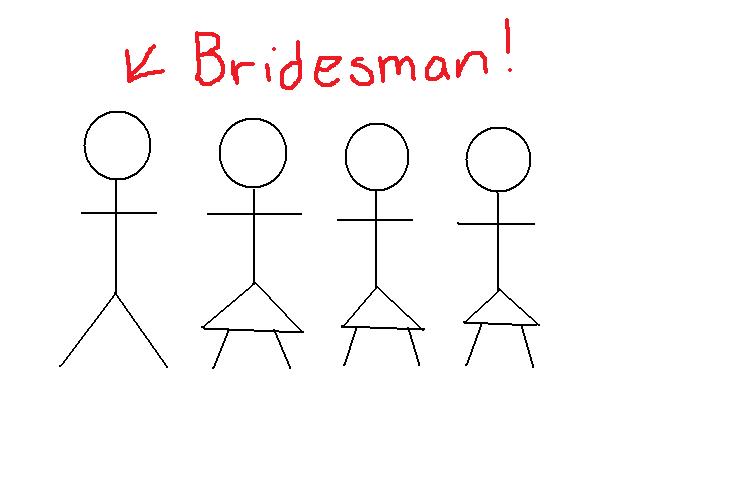
I saw this beautifully illustrated at my friend’s wedding—a heterosexual affair. Like a lot of straight women, one of her best friends is gay. On a normal night out, he would be “one of the girls”, a homosexual who dates men, though a heterosocial who hangs out with the ladies. Weddings being the ultimate gendered occasion, there is no true formality for guys who fall more into the bridesmaid category. On such an important day, though, shouldn’t the seminals of your ceremony reflect the contours of our life? That is what my friend decided, so she made him a bridesman! It was not a political statement about the institution of marriage; it was a personal reflection of interactions in her life.

When it came time for the recessional, interactions intersected into interesting.  As bridesmaids marched down the aisle with hands locked to their color-corresponding groomsmen, a tacit ponder permeated the room. Would the gay bridesman to the far-left lock arms with the last remaining (presumably straight) groomsman on the far-right? The answer was an understated, easy yes! As the two men clasped hands, wedding guests smiled lighthearted and clapped with approval. There was something about the spirit of that collective gesture that signaled more than a mere noise-making formality to end the ceremony. It was a sign of true progress. It was an indication that, gender politics aside, most Kansans just want the people they care about to be happy. There is perhaps no greater joy than having the freedom to celebrate one’s life exactly as it is.

It is likely to be a long time before Kansas joins the list of states where same-sex couples can marry. In the meantime, though, gay rights will continue to resonate on the range. The reason why? It matters when your best friend does not have the same rights as you. As more people come out, more events like this will unfold. All of that will add up to nights like that fateful Friday—when our straight friends are just as concerned about us having equal rights as we are

Really Deep Wounds

ImageIt isn’t words that matter so much; it’s the meaning behind them. Intentions add definition, giving profound significance to expressions. When comedian Tracy Morgan “joked” to a Tennessee audience that he would stab his son if he were gay, he failed to understand that negative aims often cause deep wounds. As a culture and as a community, we’re just starting to wrap our minds around the effects of those lacerations.

Recent headlines show just how deep this cuts. There’s a study that was just released by the Centers for Disease Control and Prevention that finds gay, lesbian, and bisexual U.S. high school students are more likely than heterosexual students to engage in self-destructive behaviors such as disordered eating, smoking, drug use, and excessive alcohol consumption. Some might point to this as evidence of a moral decay inherent with homosexuality, but doing so dismisses a larger truth. A different study done on the same population revealed that LGBT youth were nearly two times as likely than their straight peers to be bullied in school as well as be sexually and physical harassed. They also make up about 1/3 of all teen suicide cases. When darts of venom are thrown our way, we tend to internalize their poison. Negativity gets projected onto us from the corner of someone else’s insecurity. As a result, we emulate behaviors that bring us down farther than any attack someone else could launch.

When I was a sophomore, going to high school felt more like entering a battle field than it did an institution of learning. More people referred to me as “faggot” than they did “Jason”.  Navigating the hallways in between classes was a treacherous journey full of spit wads, back slaps, and violent threats. The bathroom was a dangerous place; I was assaulted there early in the school year and learned to just hold it in. The gym was even worse. To me, P.E. stood for “physical endangerment”.  There was a boy in my class who had an odd fascination with my sexuality. His name was Anthony. He made a mockery of my identity in the locker room with lewdly bombastic sexual gestures that made many of the other guys roll with laughter. The day he sexually assaulted me was no laughing matter, though. That was the day I began to internalize the poison; it got deep into my bloodstream.

My mind had been trained to view each day as a battle when I was an adolescent. I suppose it’s natural that I went to war with myself as an adult. After that incident, I became shackled by shame. Negative self-talk permeated my idle thoughts. My body became an inconvenient orifice I was forced to live in. Life became a chore I had to get through. I entered politics as a way of fighting back. Every electoral victory I could achieve on behalf of gay rights was a punch in the stomach to Anthony.

There comes a point, though, where you can either twist someone else’s knife deeper inside yourself, or choose to pull it out for your own relief. When you stare down negativity, it runs away.

My ordeal happened in 1999. Much of the bullying I was subjected to was viewed as a normal rite of passage. Yes, it HAS gotten better. Today, you can download You Tube vides of the President of the United States and just about every celebrity telling you to hang in there. It might seem trite, but those videos are lifelines to more people that you realize.

The aforementioned 30 Rock Star reminds us that there are those who still need to learn the significance of positive intentions, though. When you joke about gay people being stabbed, you help instill a narrative that incites violence, both externally and internally. As he embarks on his “gay pride apology tour”, I hope Morgan will come to understand that negativity is nothing to fuel on.

I’m sure that many of you have your own war stories to tell. We all have our own shame to contend with. I hope that you allow your own negative energy to be released. You deserve to live a life of deep meaning, not deep pain.

Previous Older Entries Next Newer Entries