In the 21st Century, the Gay Experience is the American Experience

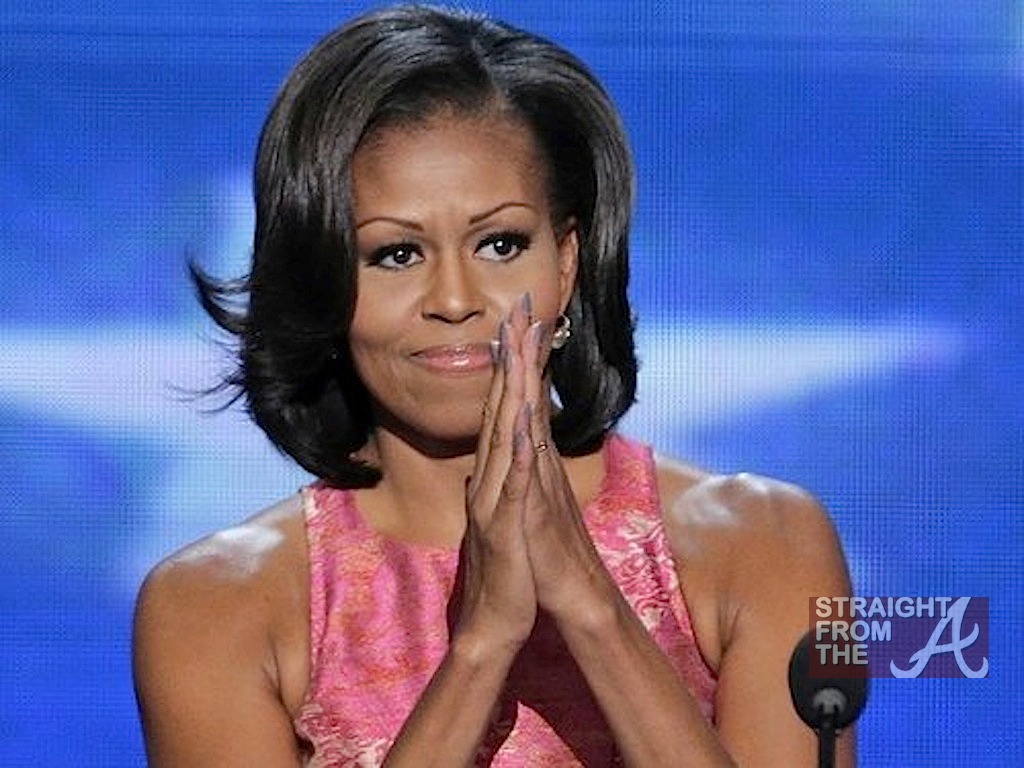
Michelle Obama addresses the DNC, bringing gay Americans into the fold of the American dream.

“…and if proud Americans can be who they are and boldly stand at the altar with who they love, then surely, surely, we can give everyone in this country a fair chance at that great American dream.”

After a series of equally moving assertions that paid tribute to how women, labor workers, immigrants, and African Americans have augmented the American experience, Michelle Obama finally brought LGBT people into the national fold with these words. Uttered by the First Lady during the 2012 Democratic National Convention, their inclusion in a prime-time address proved that the contributions of gay Americans have now become part of our public consciousness. It was an understated moment that capsized a history of our collective story unfolding in the shadows. In the 21st century, the gay experience is the American experience.

We are a renegade nation, set free by our own will from a regime that once oppressed the essence of who we are. When the thirteen colonies rebelled against England and fought the Revolutionary War, we established a precedent no one alive in 1776 could have begun to comprehend. In winning independence from our mother country, we unknowingly won the war on self-determination for all groups of people. Of course, the white, Angelo men of that time never dreamed that this feat would one day foster a nation where a black man would lead the free world only after dislodging a powerful, savvy woman as his primary competitor. Though immigrants themselves, our founders could not have fathomed that two centuries later we would be a multi-hued nation where people of all races and cultures inter-mingle, inter-marry, and melt together to form one united front. It goes without saying that this same group of men, many of whom helped author the original sodomy laws, would not have understood the concept of gay rights. There in lines the true American experience: the capability of a smart and determined people to evolve.

When we shift collectively, we allow for transformation individually. Though a student of American government and an active participant in the democratic process for well over a decade, I’ve never felt that I was part of that coveted American dream. Accepting the fact that I’m gay meant coming to terms with the reality that I’d be shortchanged the ability to have my own family. Sure, in a free society individuals can make whatever arrangements they want, but most honest gay people will tell you that legal equality and social acceptance are fundamental to basic feelings of self-worth. No one should ever believe that they need the approval of others to live their life; nobody should ever live knowing that their life in an anathema to the very fundamentals of their family or their community, though.

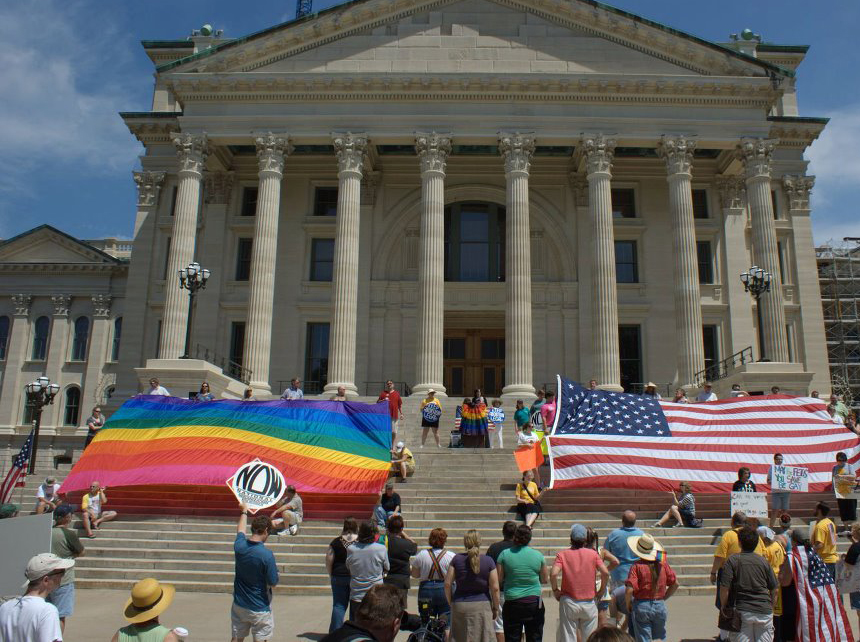
For too long, that was the gay experience. Being out meant you were an outsider. That basic American ideal that we can come from anywhere and build our own success—with the people want to share it with—has long eluded us. Legally it still does. Only six states offer marriage equality.  It’s legal to be fired from your job because of your sexual orientation or your gender identity in many locales.  Socially, though, America seems to be having a rendezvous with our own destiny when it comes to LGBT folks. There’s a reason Michelle said those words in her address: she knows they finally resonate.

Today, gay rights don’t just matter to people who are gay, lesbian, bisexual, or transgender. They matter to our parents, who watched us struggle to come to terms with who we are and just want us to be happy. They matter to our siblings, who want our families to be seen as equal to theirs. They matter to our grandparents, who might not understand everything about our lives, but who nonetheless understand the meaning of unconditional love. They matter to our co-workers, who value our talents and contributions and want us to have the same quality life they are afforded. And they matter to our friends, who choose to be in our life because they celebrate the unique sparkle that makes us who we are perhaps better than anyone else.

We are still very much in the troughs of this transformation. We have a long way to go before we are truly able to fully claim the American dream. We have, however, reached a critical point where that dream is within sight. I never believed I would have the chance to boldly stand at an altar with the person that I love. In fact, I never really believed I was worthy of love. When you aren’t included in the collective value of your community, it’s easy to downgrade yourself and your potential. That’s why collective shifts are so important; they can alter the tectonic platelets of individual’s psyches. Today, I look forward to one day standing at my own altar with pride.  I hope you do, too.

Adonis and Narcissus- In Search of the Dance Club

Identity is a myriad of personal circumstances. Though we live in a diverse world, there are certain hegemonic standards we measure ourselves against. Deviation often proves difficult. To embrace being gay, one has to accept the difference within. Unmasking Adonis requires an examination of sexual orientation’s potency. Finding its connection to body perfection is a search for the location to an exclusive dance party.

A 2007 study conducted at Columbia University’s Mailman School of Public Health gave credence to the suggestion that gay and bisexual men are at a higher risk for eating disorders than their male heterosexual peers. This is one of the only known studies thus far that zero-in on LGBT populations and eating disorders.  Of the 516 subjects, 15% of the men who identified as gay or bi admitted to at one point suffering from anorexia, bulimia or binge-eating disorders. That’s a full 10% higher than straight men in the same study. It’s also higher than the study’s 10% of lesbian and bisexual women and 8% percent of heterosexual women who reported the same eating disorder issues. While men attracted to men make up a low percentage of the population overall, they appear to be disproportionate members of the eating disorder population. Ironically, a “women’s issues” seems to be tinged in testosterone.

The reasons for this discovery within the gay community are not entirely rooted in association, though. A key competent to this study was the investigation into whether gay and bisexual men with greater connection and affiliation with the gay community are more likely to have eating disorders than those with lax or no ties. Principle investigator Dr. Ilan BLADE. Meyer’s original theory that active participation in gay culture gravitated men toward certain body standards proved inconclusive.

“It is not clear why gay men have high rates of eating disorders,” said Dr. Meyer. “One theory is that the values and norms in the gay men’s community promote a body-centered focus and high expectations about physical appearance, so that, similar to what has been theorized about heterosexual women, they may feel pressure to maintain an ideal body image.”

Adonis and Narcissus dance at another club, perhaps.

“Even gay and bisexual men who participate in gay gyms, where body-focus and community values regarding attractiveness would be heightened, did not have higher rates of eating disorders than those gay and bisexual men who participated in non-gay gyms or who did not participate in a gym at all,” observes Dr. Meyer. “This suggests that factors other than values and norms in the gay community are related to the higher rates of eating disorder among these men.”

Author Tim Bergling explores some of those “other” factors in his book Chasing Adonis: Gay Men & the Pursuit of Perfection. Though not an inherent investigation into the root causes of eating disorders among gay and bisexual men, the text explores desire and questions physical attraction. Bergling interviewed over 200 men to examine how gay society objectifies the male body. The dynamics of Steroid use, body image disorders, gym culture, Internet hook-ups, obsession, stalking, porn, erotic Web sites, and strip clubs are all discussed.  There’s no conclusive reason for why men chase after the illusive Adonis, but a reading of the quotes by the men interviewed reveals some pretty raw truths about body image and physical expectations.

“I’m not fat. I’ve never been fat. Can’t imagine living life like that, especially as a gay man. I’ve seen how we treat fat guys, and it ain’t pretty,” said Brian, an accountant from Tennessee. An anonymous “Bill” put it even blunter. “The gay male is obsessed with beauty and youth, and we objectify and diefy muscles and looks over all else. There is no way brains will ever win out over beauty in today’s gay culture.”

“Working out is like a way of life for me, almost an addiction. I get depressed if I miss one workout and a panic attack if I miss more than that. Some people say I am way too obsessed, but a lot more are always telling me how much they would like to feel my chest and biceps. I listen more to that second group,” said Hawaii model John.

Bergling’s book is notable not for its scientific evidence, but rather for the honesty his subjects offer. Each chapter contains poignant, humorous, and sometimes harrowing accounts of how body-image obsession has impacted how gay men see themselves and their peers. Ultimately, it’s a broad window into the psyche of same-sex desire.

Somewhere inside that consciousness, Adonis and Narcissus dance seductively.

Filmmaker Travis Mathews visualizes collective body ideology in his documentary “Do I Look Fat?” It’s a 70-minute film that follows the stories of seven gay men who have struggled or are struggling with body image and eating disorders. It digs deep into both gay culture and straight society to examine root causes. Themes such as childhood wounding, internalized homophobia, the effects of HIV/AIDS on the body and the prevalence of substance abuse histories are among a few that underscore the film. Perhaps most importantly, the film doesn’t shy away from asking why these common histories have, until now, been left in the proverbial closet at a community level.

The film blends personal narratives with clinical support from several experts in the field of eating disorders including an M.D. of a renowned eating disorder clinic, an art therapist, and a gay therapist who’s battled with his own body image issues. The word “fat” becomes the focal point for how gay men shame themselves and each other. Gay culture is taken to task for its part in promulgating a “one size fits all” narrative. The men interviewed have approached body image differently. Some have suffered with anorexia and exercise obsession, while others have grappled with bulimia and binge eating. Their stories are weaved into the larger narrative of the scope of this issue. While gay men are thought to represent about 5% of the male population, they alarmingly represent up to 42% of men with eating disorders, according to research done by Dr. William Howard at the John Hopkins University School. Each story in this documentary is another window into a problem so easily seen, yet readily dismissed.

“The reasons behind the high numbers are complex, painful, and in part, unflattering to the community, but the alternative to facing them head on is continued isolation and shame, both of which feed our proverbial friend, the closet,” says Mathews. “As I’ve traveled with the film, people continue to ask me how prevalent this is. My answer remains the same: it’s difficult to know with real certainty. Men, both gay and straight, are generally reluctant to seek medical attention for any health related issue, eating disorders being no exception. Our culture feeds this reluctance by its steady framing of eating disorders as a woman’s issue.”

In looking to debunk Adonis, I discovered that silence was perhaps our worst enemy. The common thread in all of the research I found was a universal understanding that there is a problem within the gay community as it relates to body image, but there is also a relative dearth in knowledge as to numbers. The trajectory for tracking this forward remains elusive. The normalization of narcissism as a means to skirt the larger issue of body fascism means our problem exists in a vacuum. If we aren’t willing to confront these fragments of our own shadows, few are going to help us sweep them up.

Cleaning up after raucous revelry is no fun; it’s far more fantastic to continue the Adonis/Narcissus dance party!

Adonis Boys

Image“I only date really think guys.”

Those words fell out of my crush’s mouth like a prison sentence falls upon a convicted felon. I sat across from him at the Barnes and Nobel’s café in north Wichita, eating a blueberry-chocolate muffin. Instead of enjoying the sensation of sweet fruit colliding with milk chocolate, I began to notice the impression of my own muffin-top underneath my shirt. I knew he would never find me attractive, at least not in my current state. I excused myself to the bathroom, where a familiar ritual unfolded.

Find a mirror. Life your shirt. Gaze at the reflection in total and complete disgust. Curse your existence. Close your eyes. Wish you were thin. Get depressed when your sockets open to the same sight.

Call it a Narcissus séance.

That was the ceremony I had been accustomed to practicing since I became aware of the meaning  of the word “weight”. While I wasn’t hideously obese, I’d always been a pudgy kid. A large part of that probably had to do with my distain for athletics and sports. It wasn’t that I despised physical activity. It’s just that from a young age it was very obvious that I was “different”. Every time I tried to be athletic, my masculinity was measured against the testosterone of my male pears.  To avoid their name calling, cackling, and physical abuse, I decided at a young age to be as anti-athletic as possible. That muffin shape that cowered beneath my chest was a constant reminder that this wasn’t exactly a fool-proof escape plan.

I decided in that B&N bathroom that I wanted a trapdoor! I had come out of the closet at 16 and had yet to have a boyfriend—hell, I had barely had sex at that point. I was tired of the sense of rejection I felt every time I read a Gay.com profile that stated “no fats”. I was fed up with being digitally dismissed every time I went onto a dating sight where most of the guys wanted “only slim/athletic builds”. More pertinent, though, I was willing to do whatever it took to get my crush to heart me back. If he only dated “really thin” guys, I would figure out how to become one of them!

I had a mentor to help me out, too. Blade and I went to high school together. Like me, Blade had always been overweight. In the years since graduation, he had magically transformed himself from a size XXL to a small. I wanted in on the secret. He promised to teach me the ways.

I had loathed going to the gym. Blade told me, though, that this magical contraption called an “elliptical machine” existed that could drastically trim my odious reflection. The first time I straddled the bulky machine, I was exhausted after 10 minutes. I wanted to quit. Blade reminded me of an unspoken axiom: as an out gay man, you’re already ostracized; to fit into the gay community, you best fit into the image of what a gay man is…and muffins be damned, gay men are supposed to be thin! I wanted to fit in, so I figured out how to make working out fit into my life.

The pounds began to roll off, too! Within a month, I was able to do an hour of cardio a day and I had lost 10 whole pounds. I wasn’t even altering my diet much. Within three months, I was down to 200. I felt great, and rightfully so. There was no reason for someone my height to weigh as much as I did. I should have started to work out. However, I should have wanted to lose weight for health’s sake, not boy’s sake.  About six months in, somewhere around the 180 mark, losing weight became an obsession.

I always hated math, but ironically numbers began to define my life. My self-worth was based entirely on the number I weighed in on the scale. I was working out 2-3 hours a day and re-arranging my schedule so that I could weight in as low as possible. Often this meant getting up at 5am for my first daily working out and not eating until 10pm so that I could get a second work out in, with yet another positive affirmation from the scale. In addition to excessive workouts, meals were being skipped. Sometimes I would go 2-3 days without eating more than 1,000 calories. I kept my eye on the prize, though—converting crush into boyfriend!

Along the way, I had lots of encouragement. I didn’t have a boyfriend, but I did have lots of attention from boys. Once invisible at the clubs, my body was suddenly a hot commodity. Guys who had turned me down for dates in years past were lining up. Go-go dancers who I once had to fling dollar bills at to get attention were now dialing my number. The reaction to my reduction was collective encouragement from everyone around me. It was gay men, though, whose words mattered most.  Constant accolades greeted my every public appearance. Lauds of “Wow, where did you go?”, “You are thin as a rail” and “You’re practically invisible” only fueled my obsession.  The grueling workouts and constant stomach rumbling were the cost of admission to Adonis and Narcissus’s exclusive dance club of acceptance—or so I reasoned.

Though companionship had been my original intention, I found that all the time I spent at the gym left little time for socializing. Most men—including my aforementioned crush—got annoyed and bored by my incessant ramblings about my diet and weight. When you starve yourself, your hunger signals eventually start to turn off. Unfortunately, I discovered that when one signal gets turned off, others follow. I had thinned myself out to faun the attention of men, but over time my sex drive had dried up…or maybe it got burned off on the elliptical machine, too!

The one consistent contact I did have, though, was Blade. Several of our friends had warned us that we had turned weight loss into an unhealthy obsession. The idea that two overweight men could have an eating disorder was laughable to us. Eventually, though, being anorexic went from a punch-line to a point of empowerment. We dubbed ourselves the “Ana Twins” and made up t-shirts to show off the sense of pride we felt in starving ourselves. I was “Ana”; Blade was “Rexia”. We wore the size small shirts to a gay club one night to near universal accolades. Blade’s crowd of club friends delighted in his “accomplishment” of having come so far—and bringing me along with him!

Eating disorders have a way of isolating you and altering your reality. We’d done a good job of segregating ourselves from most social occasions that revolved around food. Though I had already lost over 1/3 of my original body weight—and Blade even more—no number was low enough. We set a competition to see who could get to 150 lbs. first.

Blade won. He died 2 months into our game. His heart gave out after he didn’t eat a morsel for several days. Blade was found dead in his apartment, logged onto Gay.com. I assume he was trying to find a date. His physique matched many of the men’s desired dimensions. Unfortunately, I’m told ashes don’t weigh much. At the intersection of Adonis and Narcissist, lean becomes lethal.

There aren’t words to describe the difficulty of coming to terms with a friend’s untimely passing, especially one that played out in such a sequence. After I had time to process what had happened, and once I had dealt with much the guilt of having willingly participated in a farce that lead to someone’s death, I became curious about the people behind those profiles.  Who were these anonymous men engaged in a digital pursuit of Adonis? Our obsession over losing weight was greeted with raves of compliments by our gay peers. Why did their praise lead Blade to drown in a pool of his own vanity?  I need to the bottom of the pond.

Were eating disorders a silent scourge in a community that already has a lot of heavy baggage? If so, what forces were at work in the culture at-large that contributed to this new outlet for self-loathing? Even more important, why weren’t we talking about this within the gay community? What was being done in the medical realm to remedy this? In the quest to exit Narcissus Ave., these questions are more important than any one story.

Really Thin Guys: Cruising at the Intersection of Narcissus and Adonis

Image

Narcissus by Caravaggio depicts Narcissus gazing at his own reflection.

There’s an adage in homo-culture that states “the gym is gay church”. While it’s a tongue-in-cheek statement, it’s also darkly ironic. There’s an unspoken expectation among gay men that physiques be toned and muscled or slim, trim, and spryly sculpted. At a time when obesity is at an all time high, many even within the gay community assume that LGBTs are just as overweight as the average American.  Observe what’s happening around you— both in popular culture and with personal connections—and you’ll likely unearth an unspoken epidemic.

Gay and bisexual men have normalized body obsession to the point that eating disorders are an accepted and unnoticed way of life. Most would assume that body image issues and unhealthy eating habits plague heterosexual women. Though little research has been done on this topic in regard to men in the LGBT community, evidence does exist to give this issue weight. Sporadic studies with startling statistics, a few books that touch on the topic, and a documentary that focuses on gay body image do exist. Understanding eating disorders within the gay community, though, requires examination on multiple fronts. Personal stories need to be told. Research needs to be put into perspective. The facts need to be absorbed into the larger prism of gay identity.

Though worship of the gods from ancient Greek mythology ceased thousands of years ago, the chase for Adonis and the reflection of Narcissus are modern venerations of the gay community. Immortalized for his undying youth and brawny splendor, Adonis didn’t just attract the eyes of Persephone and Aphrodite. In the dance club, at the gymnasium, and on a stroll in the park, a gay man’s gaze is always cruising for his contemporary incarnation.  Absent Adonis, Narcissus comes knocking. Though legend says he drowned reaching for his own reflection, gay culture has resurrected his vanity. For many gay and bisexual men, each gaze into the mirror is a summons for his spirit. We all want to fall in love with the reflection staring back at us. It’s at the intersection of pursuit and desire that Adonis and Narcissus come back to tango…and we’re in search of the dance club!

There’s a certain mythology to our own lives.  What starts out as fantasy quickly collides with reality. I survived the ordeal of being at war with my own body. I count myself as a wounded soldier in the body wars. I had an intimate encounter with anorexia nervosa. I’m lucky to have survived its abusively fanatical embrace. In searching for Adonis, I became Narcissus. Ultimately, that ordeal lead me to question why so many gay men have a kamikaze obsession with being thin. At the time, though, my fixation was on being noticed by men—and my 22 year old, 6 feet tall, 240 pound self just wasn’t getting the glances I desired!

Image

Too many gay and bisexual men are staring into pools of their own demise right now.

In the next few posts, I am going to tell a very difficult story from my past. I’m also going to relate it into larger issues about the present health crisis in the gay community. Eating disorders an an epidemic and we need to start talking about them. I hope these posts start a conversation.

Political Bullying

Mourning a Loss
Image Credit: Jerry Wolford/AP

We’ve all become more familiar with the issue of school bullying. What we may be less aware of, though, is the fact that bullying abounds on several fronts. It’s commonplace to use politics to intimidate the LGBT community; last night’s passage of Amendment 1 in North Carolina is the latest example.

Anti-gay legislation is political bullying.

Every time a state amends their constitution to limit marriage to one man and woman, every man and every woman who is gay feels as though they’ve been personally attacked. Just as people are affected by the abuse of bullies in the hallways of their schools, there are very real effects on people who get beat up at the ballot box. The results in North Carolina were far from surprising. What caught me off guard, though, was the reemergence of a long-forgotten feeling.

Punched stiffly in the gut. Knocked down with the wind blow out of me. Stabbed in my abdomen by people I thought were my friends. My intestines slowly eviscerated by hordes of strangers. Nowhere to go for help. Wanting to run away. Lacking the physical strength or mental constitution to pick myself up from off the ground.

That’s how I felt the night of April 5, 2005. That’s when Kansas passed its own version of an anti-gay constitutional amendment limiting marriage to heterosexual couples. It passed with 70% of the vote statewide, with the same percentage supporting it in my home city of Wichita. I emphasize the word home for a reason; this is the first place where I ever truly felt at home. I came out of the closet in North Carolina and walked into a tumultuous year of being physically and verbally assaulted everyday at school. I felt rejected by the state I had grown up in. I moved to Kansas the next year; when I did, I decided I would never lie about who I am. Honesty is a seminal Kansas value, and I’ve always been able to find a home here on the range being my homo self. That campaign and the political machinations that precede it caused an odd diaspora of sort. I’ve never truly trusted my community or the people in it ever since.

The Kansas legislature first debated the constitutional amendment in 2004. At the time, I was the 22-year-old Executive Director of the Sedgwick County Democratic Party and a rather central figure in local Democratic Politics. We had a 12-member delegation of Democratic legislators, including 9 state representatives and 3 state senators. I had worked closely with each of them for several years, and considered them all to be friends and mentors. Every single one of them knew of my sexual orientation, and it was never an issue. In fact, nearly all of them had voiced their support for gay rights to me.

Yet, when it came time to vote, 3 members of the house delegation (including a very liberal member who I regard as a very good friend) voted to amend the constitution to ban gay marriage. Two of the three called me in tears to apologize. I greatly appreciated that on a personal, but it did nothing to change public policy or their voting record. Nor did it ameliorate the hurt feelings of countless others. The other member also called me, but he did so to lecture me on the politics of being pro-gay marriage. He told me that if I had any true political instinct, I would understand that this was a losing issue. I was told to be happy that he voted the way he did because that meant he’d keep that seat in Democratic hands. He also implored me to defend him to party activists who would be angered by his vote.

I should have hung up on him. I should have told the other two exactly what I thought of their post-vote water works. Instead, I just took it. I continued being a soldier for the Democratic Party because they at least gave me a home, even if some of our members went on record to say I didn’t deserve to have one. After that vote, though, I felt homeless.

A key part of political bullying is the constituency getting used to taking the hits. Politicians only beat up on groups who don’t fight back. For too long, we in the LGBT community haven’t fought back. It wasn’t until after the anti-marriage amendment passed in Kansas that we had a truly effective statewide LGBT civil rights organization. Today, The Kansas Equality Coalition holds people accountable who don’t have the backbone to stand up for what they believe in.

Twenty-nine states have had battles similar to the ones in Kansas and North Carolina. Each time they have, lots of people have been hurt. They’ve felt disenfranchised by the political process. They’ve felt left behind by their communities. They’ve felt betrayed by their friends. When you’re getting harassed at school, you wish that someone would stand up for you. Often times, you find out that the people you thought were your buddies are too afraid to take a stand; in fact, they sometimes join in just to fit in. Our lawmakers are supposed to champion our safety and well-being. Yet, for LGBT folks, they’re often the ones who take away a sense of security. We look for those few allies who will stand up for us, just like we looked for those friends back in school to be our defenders. Cowardice legislators who hold quiet sympathy yet fail to stand up to anti-gay prejudice are just as culpable as the bully lawmakers.

I’m happy to report that two of the three lawmakers I mentioned above switched their votes and voted against the marriage amendment when they had the chance later than session. The other one? Well, recent polling showing a majority of Americans supporting marriage equality show he was definitely on the wrong side of history. This issue is so much larger than them or me or any single state. Political bullying is an affront to the very core of who we are as Americans. This is a country where we’re supposed to enjoy the freedom of attachment—to people, to communities, and to the process that governs us. When we take away other people’s rights, we deny them the dignity of what it means to be a whole person.  Beaten up and disembowel, those of us who survive political assaults do so without our full spirits. We’re left with only part to offer. All of our state—from North Carolina to Kansas to California—deserve fully engaged, healthy populations of people from all walks of life.

Just as we’re having conversations about how to end bullying at schools, I hope we can start talking about how to end the bruising battles like the one that just occurred in North Carolina. President Obama’s announcement today that he personally supports marriage equality is a step in the right direction. We need to take many more giant leaps. Political bullying leaves scars. It’s time we heal all of our wounds.

Bullying–Getting Used To It

From “Bully”
Alex’s mom isn’t about to get used to it.

“Do you understand that at some point, you got used to this?”

That’s what a very alarmed mom in Sioux City, Iowa asked her 12 year-old son, Alex, after being shown harrowing video footage of the hazing he encountered daily from his peers at school. In the midst of filming for the documentary Bully, the filmmaker felt obligated to show her what was occurring. Her middle school son was befuddled by the question; being the target of verbal and physical assaults had become so routine that he normalized what was happening to him. He even considered his assailants to be his friends. If they weren’t, that meant he didn’t have any. He had gotten used to it, but the mom said she never would.

Nobody wants to be alone. Everyone wants to fit in. Sometimes, that means you end up accepting the cruelty of others in a bargain for having your own ground to stand on. Adolescents must carve out their own place in the world. Their unique connections, friendships, and interests are what usher them into eventual adulthood and distinguish them from their parents. It’s a natural part of development. Bullying interrupts that progress, though. For a kid like Alex, he might be hated on, but at least that’s happening in his own space. The top yearning of teenagers is to carve out something distinct to them.

Eventually, we all grow up. Bullies do go away. When they do, their ghost remains. The victim often steps in to pick up where they left off. You can do a much better job of bullying yourself than another person ever could do in oppressing you. After all, no one else knows your darkest vulnerabilities.

I’ve explained in a previous post my own encounter with bullying. This column isn’t about what happened to me at school 15 years ago when I was a teenager. It’s about the effect that has had on my life as an adult. I offer up my story as insight into the seriousness of this problem in hopes that if you have kids, you’ll do everything you can to ensure they reach adulthood healthy and adjusted.

Kids become targets for different reasons. I was bullied because I’m gay.

I didn’t come out until I was 15, but somehow all of my peers knew when I was 7. School was a daily landmine of verbal insults and physical assaults. I never told my parents because doing so meant I would have to admit that their words were true. I grew up in a somewhat fundamentalist household. We went to a tongues speaking church three times a week, and I attended a Southern-Baptist influenced Christian school. When I wasn’t being called “faggot” on the playground, I was hearing my parents discuss AIDS being God’s punishment for homosexuals at home. When I wasn’t having spitballs thrown at my head, I was listening to Mrs. Lovelace, my 7th grade Bible teacher whom I idolized, explain that gays and lesbians had demons living inside of them. When I wasn’t getting punched in the locker room, having my charismatic youth group pastor invite in the so-called ex-gay ministry to remind us that we’d be going to hell if we committed “homosexual acts” was just as painful. I knew exactly who I was, and I accepted myself. There was no one around who embraced me, though.

So, I compartmentalized. I never believed their lies, but I did let their limited knowledge effect me. I was reminded daily that my feelings for other men were disgusting, and that I was an abomination. Their ignorance arrested my sexuality. I graduated high school. I stopped going to right wing churches. My mom became a liberal-minded borderline-Buddhist who meditates and reads the Kabbalah. My dad, though limited in his interest of sociology, nonetheless loves his gay son. I’ve had amazing friends. I’ve had really good jobs.  But I have never known the love of anther man because everyday, I have stepped in where all those bullies used to be. I became so used to being alone, isolate, and beaten down that I never allowed myself to form a healthy attachment to another man.

At some point, I got used to it.

If teenagers yearn to carve out something distinct, as adults we come to believe we are entitled to our own autonomy. My arrested sexuality took on a mutant form in its pursuit of sovereignty. In my early twenties, I developed intense, obsession-like crushes on a series of three different men. All three were high quality individuals, but they simply were not interested in me sexually. I knew that early on, but I lingered, telling myself that their feelings would change. I was really just flagellating myself in the same fashion others had once abused me. The kid punching me, the pastor preaching at me, and the parent indirectly condemning me had left; but I stepped in and took their place.

Unrequited love became the theme of my life. I always picked people I knew I’d never have. I would fall madly in love with straight friends. I would find gay men emotionally unavailable. I became a lightning rod for anyone with a stormy presence. If I were abounded by complications, I would never truly have what I deserved. That’s just what the bullies wanted; I did a much better job than them of denying myself happiness.

I am one of literally millions of gay men who have “gotten used to it.” We seem to have a special way in homo-culture of torturing each other after others stop tormenting us. I would venture to say that a large reason why gay men are so prone to drug use, promiscuity, alcoholism, and body fascism has to do with a culture of self-affliction that arises from the aftershock of being bullied. We continue the cycle of abuse by putting unrealistic expectations onto ourselves so that we never experience the one thing we truly deserve—happiness. We surround ourselves with friends who are bad influences, do activities we aren’t really fond of, and eventually we just tell ourselves that it’s all ok.

We just get used to it.

Just because you survive adolescence doesn’t mean you’ve gotten past the effects of being bullied. I’m just now coming to terms with what happened to me as a teenager…and I’m almost 30 years old. There’s hope, though. It doesn’t have to be this way. You don’t have to ignore problems for a decade and a half and miss out on enjoying your youth. If you’re involved with a child in any way—as a parent, teacher, mentor, or authority figure—make sure you know what’s going on in their world. Put your own prejudices aside for the sake of their health and safety. Kids don’t tell their parents that they are being bullied because they are worried they’ll disappoint them. Make it clear that the only thing disappointing is an unhappy child.

Be like the mom in the movie Bully. Don’t get used to this.

Maybe you’re like me. Maybe you’re someone who survived being bullied, but you let a part of you die with that experience. If so, go back and revivify that which was taken away from you.

The bullies of our past have moved on; it’s time for us to do the same.

Drinking Gay

Glory of the 1980’s.
photo by David Quick.

We live in the shadows of our past. We are shaped by the events of our own, individual life. We are affected by the histories of the communities to which we belong. Try as we might, we cannot escape certain realities; we can only embrace the truth.

Sometimes, that truth comes in the form of a massive headache and a tumbling stomach the morning after a night out. You’ve all been there. You really didn’t feel like going out. You certainly didn’t want to drink. But it’s Friday, and there’s an 80’s themed dance party at the gay bar downtown. Tonight could be the night—the night you meet that magical person; the night the world sees just how electrifying you are. So you throw on some parachute pants, find a Pac-Man t-shirt, and summon your inner-Zack Morris. You down a shot of Tequila to take the edge off. You head out the door of your apartment and head toward your destiny.

You arrive. The music is loud and familiar. It’s the same tracks they always play…just with a few extra Madonna songs tonight. It’s the same crowd, too. You recognize 90% of the people…it’s the unknown 10% you’re there for, though! You scan the room. You zoom in on a few prospects. They don’t zoom you back. You want to leave. You stay, though, and order a drink. If you’re liquored up, you’ll forget just how disappointed you are. This is an important moment.

It’s within this space—the time in between when your expectations were high with hopes and the time just before they are shot down by the disparages of reality—that alcohol becomes your fortune. It’s sort of like a liquid tax for being gay. You can be sober to the loneliness of your own reality, or you can pay a toll to intoxicate bliss.

This is how queer people are disenfranchised.

Hangovers aren’t particularly indigenous to homos, but there are certain reasons that LGBT folks are three times more likely to abuse alcohol than their hetero-peers. In the Midwest, the isolation is compounded by a conservative political climate and a fragmented sense of community. There aren’t enough of us, and we don’t really know what to do with each other. We live in a heterosexist world where no one teaches us how to be intimate with a member of the same-sex. It’s quite the opposite, actually. Most of us grew up being engineered toward a sexuality that didn’t fit; even when parents and peers accept us, we’re left alone to negotiate how we integrate into a world that only has fragments of space for people who are LGBT. It’s highly uncomfortable.  So, we drink. Gay identity often amounts to being a barfly.

You aren’t socially deconstructing when you’re rocking out to “99 Red Balloons”, though. You’re just trying to keep up. You’re keeping up appearances by pretending that this scene of ours is just fine by you. You’re also just plain trying to keep up with the number of drinks those who arrived earlier have downed. By the end of the night, you’ve imbibed 7 beverages. Maybe you’ve even gone home with someone. What about the magic and the destiny, though? Providence got lost somewhere on the dance floor… or perhaps inside one of your glasses.

When we surrender our uncomfortabilities to the bottle, we drown the very hope that is intrinsic to our unique being. There’s a special challenge to being gay; in the 21st Century, we have the ability to redefine the very terms of life by rising to the occasion of this contest. We live in a highly assimilationist culture. Advertisers and media conglomerations tell us what music to listen to, what TV shows to watch, what clothes to wear, and which foods to eat. To acknowledge a sexual orientation outside of heterosexuality is to admit to being different. It’s an affront to American social order. Yet, it’s also the paradoxically the paradigm of what it means to be American. In the last century, we opened doors for people who have been marginalized by expanding opportunities for women, racial and sexual minorities, persons with disabilities, and other groups. The challenge of this century will be to determine what we do with the freedoms we’ve been afforded. The queer community can play a distinct role in this.

Instead of blending into a rainbow flag subculture where Cher, Madonna, and Lady Gaga are our patron saints and where communion is taken with a shot of tequila and some poppers, we need to be masters of our own universes.  We need to create our own culture—lots of different cultures so that each person, homo or not, can have a distinctive place where their talents and gifts fit. Alcohol is the antithesis of uniqueness. It’s a distraction so that you don’t have to contend with that peerless sparkle inside. If we can simply own who we are—and I’m talking about characteristics way beyond sexuality—we can create powerful forces. Part of the reason drug use, alcoholism, promiscuity, and suicide rates are high in the LGBT community has to do with how we discourage true individual examination. Gay people are just as guilty as the straights, too!  There’s a tendency to “fit” into the gay community as soon as we come out so that we aren’t left standing alone. Empty bottles on a table and toxins in your tummy aren’t company, though.

We homos have a peculiar history with alcohol. It brought us together as a movement when bars were the only true avenues for same-sex socialization.  In many places, that’s still true. As a community, we need to start thinking about what this means in terms of how we live our lives today.

Eighties dance parties are fun. Zack Morris is cute. But is going out all the time worth the health risks?

I drink. Sometimes I drink too much. Hell, I drank too much last night! But I’m getting tired of waking up feeling terrible. My body is screaming for change. I have a feeling yours might be, too. So let’s start a conversation. How can we get out of the bar scene and get more in tune with our own being?

More to come…much more…

Pride. Prejudice. Possibility.

Pride is a very misunderstood concept.  Many of our straight friends don’t understand why we in the LGBT community insist on being treated like everybody else, only to then march in a parade where we single ourselves out solely because of our sexuality. Many of us who are queer forget to take in the magnitude of pride’s significance; it’s much larger than six-pack-sporting twinks and dykes on bikes. It’s bigger than the largest rainbow flag. It’s more potent than any shot of premium-shelf vodka.

Pride isn’t about a party. Pride is about combating prejudice. Pride is about the enormous possibility that exists when each person has the freedom to be their own, unique self. If you are a homo on the range, you have the distinct opportunity to harness the spirit of pride to change the contours of the land in which you live.  There has never been a more pressing time.

As blue states on the coasts move toward marriage equality, states in the Midwest are actively trying to take existing civil rights away. In Kansas, current state law does not protect people from being fired from their job or evicted from their apartment because of their sexual orientation or gender identity. The cities of Lawrence and Topeka as well as a number of school districts, universities, and individual employers, though, have extended non-discrimination policies to ensure that LGBT employees are protected. There’s a bill being considered by the Kansas Legislature, though, that would invalidate all of these existing protections. Dubbed the “Kansas Preservation of Religious Freedom Act”, the legislation would allow any boss to fire an employee for being gay, empower any landlord to evict a tenant because of their sexuality, and even sanction healthcare providers to deny services to clients whose lifestyle they find morally offensive.  It passed the KS House by a wide margin, and awaits Senate action when the legislature reconvenes in late April. Of course, the proposal has the enthusiastic support of Republican Governor Sam Brownback.

The bill’s primary backer, though, is Democrat Rep. Jan Pauls of Hutchinson. Yes, Democrat! She’s also the same legislator who last year went out of her way to ensure gay sex remained a statutory crime in Kansas, punishable by jail. Get fired. Be homeless. Go to prison. That’s the message 82 out of 125 legislators sent to queer Kansans (that includes all but 7 Republicans and literally 1/3 of the House Democratic caucus, btw)! Even if the bill fails to become law, the conversation has made many aware that they can use their religion to justify discriminatory acts. Certainly we must respect deeply held personal convictions. However, there’s a line to be drawn when someone’s faith is used as a weapon to harm another person. This isn’t about religious freedom; this is a blatant attempt to codify prejudicial sentiment into law.

This is exactly why pride is so important. When each of our cities holds festivals, parades, and events where large numbers of gays, lesbians, bisexuals, and transgendered people conjugate, we demonstrate that we aren’t ashamed to be ourselves. We show politicians that we exist. We prove that we aren’t afraid to be present and counted. A big part of why Kansas legislators are trying to figure out how they can fire us from our jobs instead of figuring out a way for us to be treated equally revolves around visibility. Being out is a social responsibility. Think about what might be possible if everyone in the Midwest who was queer was open about who they are.  I don’t discount the massive amount of personal strife coming out can cause; in the end, though, most family members, friends, and co-workers will work out their own issues and embrace the people they love. When they do, people like Jan Pauls won’t just have to contend with the homos, but also an army of our supporters!

The next time a straight person asks you why we insist on having our own parades, tell them it’s because we don’t want them paying for our unemployment after we’ve been fired for being gay. More important, though, is the fact that equality matters to everyone because it outlines the boundaries by which we all get to mold our own, unique selves. We homos on the range deserve a party—and a few drinks—for having to put up with the kind of blatant hostility I spell out above. What everyone deserves, though, is the chance to live in an authentic world where each person has the freedom to be who they truly are. Combat prejudice by taking pride in possibility!

The Cities Speak. Are You Listening?

Me and David Quick on a road trip to Lawrence (photo by David Quick)

Every city has a unique sound. All communities have a distinct dialogue. Each area has its own voice. But how often do we listen to the words and absorb their meaning? There is perhaps no great influence on a person than their geography. Where we live dictates who we become. We can and we do defy odds, but we can never deny how the contours of our surroundings influence our every action along the way.

If you are a homo on the range—a queer person shaped by the boundaries of a state like Kansas, perhaps—your life is very different than someone who is LGBT in NYC. That affects more than your ability to see shows on Broadway, too! It directly impacts the terms by which you can negotiate your life. New Yorkers are protected from being fired from their job because of their sexual orientation or gender identity. They can marry the person they choose. They can also more easily find people who are like them. None of that is true in the Midwest. But the true meaning of “homo on the range” has little to do with what we don’t have; it has everything to do with what brims beneath the surface of our flat land. Our lives are just as compelling here as they are anywhere else. In fact, it takes a certain amount of backbone to navigate this terrain successfully.

If you don’t believe that can be done, I have visual proof! Or rather, my friend does.  And this testimony comes with some very enticing doughnuts to go along with a side of allegory. This Friday evening, Wichita artist David Quick will debut a collection of photographs documenting contemporary life in Wichita at The Donut Whole. Paired with him will be his niece, Vanessa Quick, whose photos detail everyday life in New York. It’s a subtle juxtaposition of how people and place collide to formulate indelible imprints.

This is not a gay art show; the images document a myriad of lives, events, and circumstances. However, a simple examination of the photographs does more to illustrate my point than any words I could ever write. These images document subtle ways of how two very different hordes of people are adapting to differences. In her artist statement for the show, Vanessa says, “I think most interesting moments go unnoticed.   They are so commonplace that we forget that they’re even interesting.” Having known her uncle for several years, I can safely say she has adroitly adapted his approach to snapping a camera. To watch David quick take a photo is to witness the freeze-framing of social evolution.

Late last summer, I received news that a very important friend had committed suicide. He was openly gay and lived near and often visited New York City. I habitually feel alone and isolated being gay in the Midwest; I envied his proximity to a city with a thriving LGBT community. Mere association can’t keep everyone on life support, though. Only a life in motion can survive. The morning after I learned of his death, I took a road trip to Lawrence with David Quick. Along the way, I was reminded why I fight to stay alive. We took a pit stop along Highway-70 at one of those gas station/McDonalds hybrids. I’ve always had a flair for funky fashion, and my sunglasses are no exception. David and I were both sporting wild shades that looked as though they were sold at the corner of Haight & Ashbury during the Summer of Love in 1967. We looked queerly rowdy.

Subtle changes, seismic shifts. (photo by David Quick)

An averagely-dressed white-haired grandmother and her young grandson spotted us as odd spectacles. The kid was intrigued by our outrageousness. I asked if he wanted to try on my glasses. The grandmother looked a tad bit afraid of us. I could tell she wanted to run away from people so different from her. But when David shoved his glasses onto her head and I handed the kid mine, she didn’t have much of a choice other than to go along with an impromptu photo-op. She ended up being amused and even complimented our audaciousness. “You sure do it differently,” she said, though with more awe than judgment. We all shared a laugh together. It was a random moment of joy. Tacitly, she accepted us. The range of their lives got a little bit queer. Sometimes, it’s Kansas that keeps you alive.

This is one example of many I’ve seen over the years where subtle interactions have seismic repercussions. They may not be changing laws yet, but they are shifting minds, even if slightly. In the Midwest, we can’t always be as direct as our friends in New York might be, but the most interesting moments in any city often go unnoticed. I’ve seen a good bit of these images, and trust me—Kansas stacks up well with NY. I heart them both, but for very different reasons. We all need to learn to appreciate our surroundings—no matter who we are or where they lie. Transformations are taking place everywhere, even if the people changing are intermingling on different topographies.

In this complex world with constantly evolving mores, it’s comforting to be able to see our progress captured on film. When we see we believe. When we believe we speak. Our cities are speaking. Where are you in the dialogue?

You can meet David Quick and Vanessa Quick this Friday at The Donut Whole (1720 E. Douglas) near downtown Wichita. Their “The Cities Speak” exhibit opens April 27th at a Final Friday reception, 6pm-10pm. Works will be on display through the month of may. Get a doughnut, analyze some art, and go “on the range”!

The Gay Agenda

Image

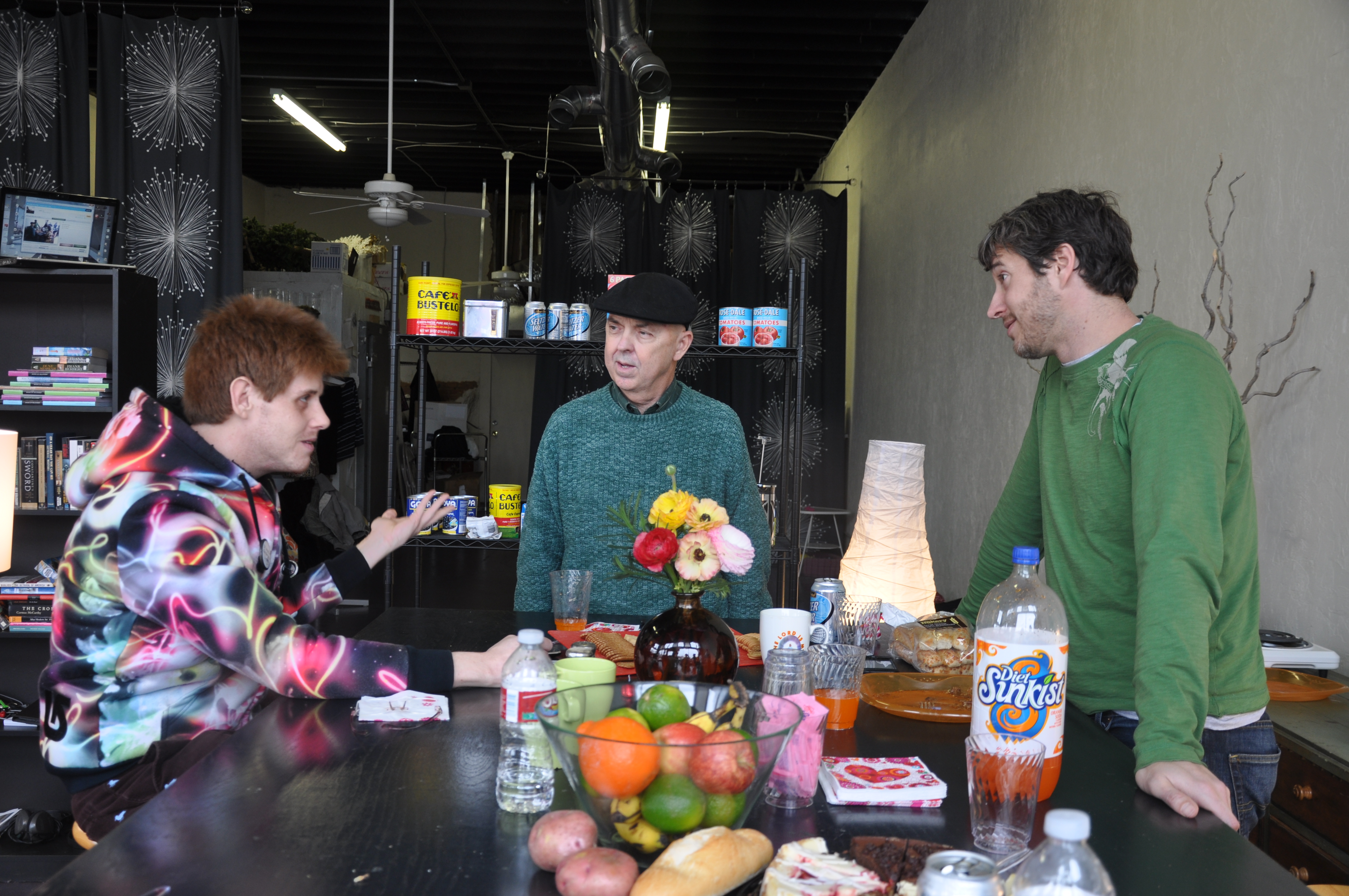
Talking over the gay agenda with Randy Roberts Potts.
Photo by Robin Dorner

The Gay Agenda

That’s a buzz phrase designed to elicit alarm and entice anxieties. It implies that gay people have different intentions and an alternative itinerary than those who are straight. The religious right has used those words as a rallying call for decades. Their alarming rhetoric has historically worked pretty well to divide us in places like Wichita; however, a new reality has emerged that is disarming fear and replacing it with something much less titillating—the bore of reality!

Thanks to Randy Roberts Potts, grandson of the famous Pentecostal televangelist Oral Roberts, you can see exactly what the gay agenda looks like. Taking a page from his late grandfather’s penchant for affecting the masses, Potts is embarking on a performance arts odyssey that is showing Middle America just what it means to be gay. There’s no better illustration for “homo on the range” than what he is doing! It’s not as raucous, edgy, or even avant-garde as it might sound, though. That is, unless you consider watching television, making dinner, and playing video games to be acts of prime subversion.

“The Gay Agenda” is centered on the notion of showing audiences in mid-size conservative towns across America what domesticity looks like for same-sex couples. A “home” is set up inside a vacant storefront and a male or female couple essentially lives a fishbowl existence for a period of time over a couple of days. Passersby can see two women holding hands on the sofa while watching the evening news or witness a guy play X-Box while his boyfriend prepares dinner. Occasionally the floor will be vacuumed. Sometimes coffee will be made. Regularly, friends stop by for a visit.  This is the stuff that has the likes of Rick Santorum and Michele Bachmann foaming at the mouth with disgust!

The “Gay Agenda”, as conceived, is actually pretty dull. The reality this performance mirrors, though, is anything but boring. This is a live action, real time demonstration of what has been happening in the culture for the last decade—and yes, even happening here in Wichita. As gay people have come out of the closet, straight people have been forced to witness their lives on full display. They’ve discovered there isn’t a whole of difference in terms of the daily schemas of our lives. It isn’t often that one gets to consciously witness cultural transformation as it happens, but with this mission, that’s exactly what is going on. Passersby in locales that might not have open dialogues about the issues surrounding sexual orientation are immediately transported into this conversation when they see the make-shift storefronts. Potts himself is often outside with volunteers, engaging them in discussions about what is taking place and challenging them to examine their own, internal hesitancies.

The fact that Potts’ linage is so closely aligned with American religious fundamentalism really speaks to the core struggles that take place in a town like Wichita. Religion is an important force in the lives of many. Gay rights activists cannot hope that people will disregard their deeply held faiths in favor of secular acceptance. Gone are the days when we must divorce our spirituality to accept our sexuality. Oral Roberts isn’t the only fundamentalist Christian to foster gay ancestors. I’m sure you know several folks here in town who are people of faith and also people with a beloved gay relative. The key challenge for the gay rights movement in this country will be winning over the hearts and minds in the middle of America. To do that, we have to meet people where they are—and in Wichita, a lot of them are at church. This subtle piece of performance art is a reminder that there is no “us” and “them”; we all have the same agenda…however boring it might be!

Randy Roberts Potts’  “The Gay Agenda” will be rolling through Middle America starting this spring. There are plans underway for stops in Kansas, including Wichita. I had a chance to visit with Potts in Oklahoma City when he and his partner inaugurated this instillation, and he was quite interested to see what’s stirring on the range. Stay tuned for more information!

If you’d like to help bring “The Gay Agenda” to Wichita, e-mail thehappygayagenda@gmail.com! You can also follow along and watch live streaming of the performances by visiting the Facebook page at http://www.facebook.com/thegaygayagenda

Previous Older Entries Next Newer Entries