Same-Sex Solstice

ImageIt isn’t just the times that have changed. What we can do with our time has rapidly evolved. Call it a same-sex solstice!

It’s easy to get caught up in the political narrative over gay rights. In a conflict-driven world, LGBT struggles are often defined by “battles” over legislation repealing the ban on gays in the military or as “showdowns” at the polls over gay marriage referendums. In January of 2011, though, Out magazine released results of a study that included an interesting window into a very personal turning point. Their survey found that 80% of LGBT people between the ages of 18 and 25 plan to marry; 70% say they want to have kids. By contrast, only half of their older peers in the 36-45 range want to marry, and just over a quarter want to raise children. The younger one is, the more optimistic they tend to be that they can claim the same kind of life that their heterosexual peers take for granted.

Not long ago, this boundless frontier was illusive. That fact has lasting effects the further one is from the budding of young adulthood.

When I came out of the closet, I had to accept the fact that I would never have a family of my own.  That was in 1998. Matthew Shepard’s violent murder and the cancellation of ABC’s Ellen were hot topics in LGBT current events. The U.S. was at a turbulent crossroad with sexual orientation, and many of us who were grappling with burgeoning identities got caught in the crossfire of a culture war. My fifteen-year old self couldn’t fathom that a little over a decade later, states would be legalizing same-sex marriage and gay teens would be prancing in primetime on Fox’s Glee.

A quiet turning point has lead to the acceptance of a new reality. I’m not alone in being on the frayed edge of that promise, though. It’s easy to be cynical about something you believe you’ll never get to have. Odd as it might sound today, coming out in yesteryears meant embracing the truth of who you are while simultaneously acknowledging that society wasn’t quite ready to make room for you.  Many of us have developed hard shells and postured masterful defense mechanisms as a result. Ever wonder why gays are prone to higher rates of drug use, eating disorders, smoking, and alcoholism?  It’s not because we’ve been lacking a moral compass; it’s because this mortal world has been lacking a place for us.

Today, coming out of the closet means coming in to a new world of possibility. Even in places like Kansas, where gay rights remain elusive, there’s room for we homos on this range. Go to the Riverside Perk on any weekend night and you’ll see a familiar site—giddy teenagers on double dates listening to live music  at their favorite local coffee shop. Except now, it’s pretty commonplace to see a doe-eyed male-female couple accompanied by a buoyant boy-boy date, listening to a just-out-of-high school lesbian strum her guitar, singing sugary ballads about her girlfriend. The heated rhetoric and bombastic politics boil down to something so innocent and so simple.

There’s something therapeutic about being in the company of such unfettered optimism. Life is far from unproblematic for the gay youth of today, but it’s also not unpromising. And those promises that this quiet revolution has delivered aren’t out of grasp for those of us who are older. The shadows of our tattered past don’t have to dictate the realities of our lives today. We paved this road. This is our solstice. Now let’s walk on it and enjoy the view!

Everywhere to Go

ImageThere’s no one to hear; You might as well scream; They never woke up; From the American dream
And they don’t understand; What they don’t see; And they look through you ;And they look past me
Oh, you and I dancing slow; And we got nowhere to go

Those are the words that Kansas native Melissa Etheridge used to describe what it meant to be a homo on the range circa 1995. The straights probably don’t realize that the hit love song, Nowhere to Go, is actually a forlorn ballad detailing the dichotomy of queer love in the Midwest. We could find shelter in the arms of our lovers, but in the decades preceding this song, being embraced by the masses was eluded.  Generations of our “forequeers” literally had no where they could go and completely be themselves. They kept their love a secret and they muted their identities. Clandestine encounters in old abandoned box cars were about as public as it got in many places.

Fifteen years later, I’m happy to say that homos are a bit more free-range! As people like Etheridge started coming out in the mid-nineties, Americans gradually did wake up from their limited idea of the American dream. A whole generation is now living with the understanding of something they saw during their development—same sex love. Grassroots activism, political victories, and legal battles helped pave the way for a more inclusive America. But it was the personal courage of each individual who came out and demanded to be heard that really caused change to happen. Suddenly, we in the LGBT community have lots of places we can go!

And that’s part of why I ultimately pulled the plug on my city council campaign.  When I came out in 1998, we lived in a mush harsher world. I was keenly aware that my level of personal joy would be depleted on account of the legal status and social standing afforded to gays and lesbians. Political involvement felt like a necessity for personal survival. For ten years, I was on the front lines as an activist. It was non-stop, high stress work that left little time for a personal life. Gay was a political identity for me; I have yet to actually experience same-sex love.

Life is short, and sexual politics aside, you should enjoy every minute of it. Often times we get involved in activities that bring us a sense of purpose and great joy for a season. Ultimately, though, a full life will involve changes in passions, places, and people. When something you are doing ceases to bring you joy, you owe it to yourself and those around you to stop. Politics became an immense burden for me some time ago, but out of a sense of obligation, I persevered. It would have been remarkable to be the first openly gay man elected to major public office in the state of Kansas. More awesome, though, is the fact that in 2010, I have the ability to choose my own happiness.

It’s important to be involved in politics—if you have any inkling to get involved in activism, I urge you to act on that. Giant steps backward can and will be taken if we are not vigilant. But the moment your passion subsides, step aside for the next individual. I won’t be the first openly gay person to sit on the Wichita City Council, but now the door is open for someone else to take that seat. Maybe that someone is you.

Fifteen years after Etheridge romanticized there being nowhere to go, we have a boundless prairie of opportunities. Queer Kansas can go anywhere. Wherever you go, though, always follow your heart. Being true to you is pretty damn revolutionary!

Flux of a Movement

There’s a moment captured on film that simply, yet perfectly shows the flux of shifting attitudes about gays and lesbians. This summer’s much-hyped The Kids are Alright showcases the joys, trials, complexities, and simplicities of raising a family in modern America. When the family’s teenage son realizes his moms are going to stay together despite a rocky period in their relationship, he cracks a satisfied smile. Nodding with approval over their decision to remain a couple, MGMT’s “The Youth” is queued. Audiences understand that the kids of same-sex couples ARE alright.

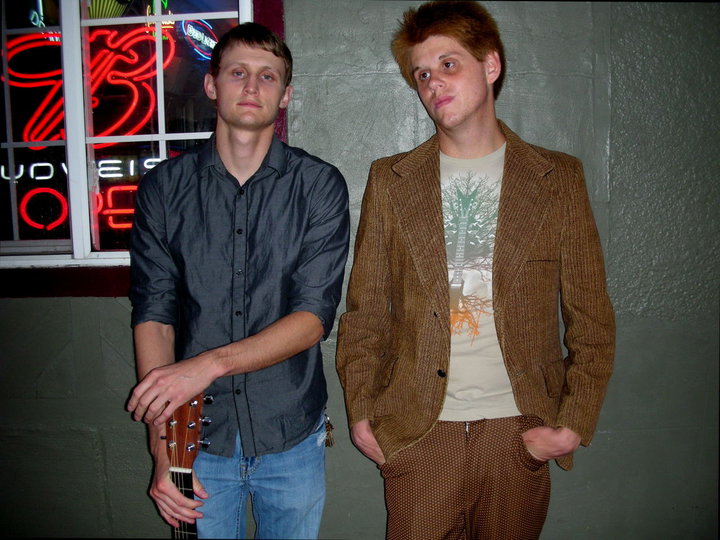
Gay/Straight Alliance-me with ICT musician Justin France (photo by David Quick)

The youth, indeed, are starting to change! But that change is recent, and the future is still very much in flux.

It’s no secret that over the past decade, a cultural shift has taken place among the millennium generation that has lead to an overall change in attitudes toward gay people.  Most under the age of 35 view their LGBT peers as equals. They see their same sex relationships as being on par with their own hetero-romances.  Polling data shows that nearly 2/3 of young adults support gay marriage, but this social transition is much deeper than any poll could ever pronounce.  At the time of this writing, the U.S. Senate has failed to repeal “Don’t Ask, Don’t Tell” and Proposition 8 remains on stay in California; gays remain barred from both military and matrimony.  Yet, something progressive is afoot in the culture. As I write, I wait for musician Justin France to join me for dinner. He’s a 26 year old straight man, and fast becoming one of my closest personal friends.  This gay/straight alliance is a pairing that is not so uncommon anymore.

It turns out that social barriers, not legal hurdles, were the most significant change to unfold for gay people during the 2000’s. No longer relegated to socializing solely in bars with other gays, we were able to form real friendships with straight men and women, integrating into the culture at-large.  That’s what happens when closet doors open. We end up in a post-Will & Grace world where we can be whole people instead of just gay people. How many of you who are heterosexual have a dear friend of another orientation whom you can’t imagine not having in your life? Your life, too, would be different without this social flux!

A flux is a precursor to change, and while socially we’ve made progress, legally we lag behind.  The kids are alright until tragedy puts their family in limbo. With most states not giving any legal recognition to same-sex couples, the death of one mom doesn’t always mean the surviving parent will get custody. The youth have to make change happen. Telling a pollster you support gay marriage and then going to get a drink with your gay best friend is great, but it’s not enough to ensure that this flux gives way to a permanent state of fairness.

You have to vote, advocate, and demand. And then vote again! If we do, this generation can finish the change!

Kansas Queer Politics: Wichita’s Legendary Moment

Image

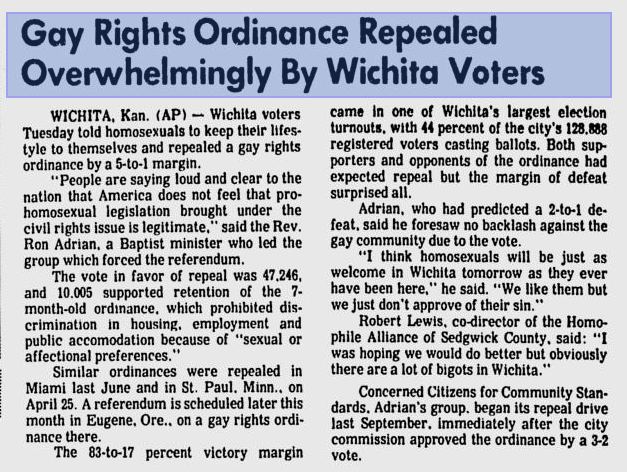
Wichita's civil rights ordinance has never been restored.

Avid readers of this column know that today, you can be fired from your job for being a homo on the range. Many are not aware of a legendary window of time where such was not the case, though. Once upon a time in a land not at all far away, it was illegal to discriminate on the bases of “sexual preference” in housing, employment, and public accommodations in Wichita—for a whopping seven month!

The ICT had a very progressive, forward thinking city commission (now referred to as the city council) in the late 1970’s. In the fall of 1977, Wichita became one of the first cities in the country to enact a non-discrimination ordinance that covered gays, lesbians, and bisexuals. The passage of the law was no accident. Wichita had an engaged and politically savvy LGBT faction that was an active, visible part of the community at-large. They knew how to organize and make things happen. They supported candidates in elections, and they educated lawmakers in office. At the same time Harvey Milk was campaigning to become one of the nation’s first openly gay elected officials by the bay, gay Wichitans were staging a little revolution of their own on the prairie.

When the ordinance was originally passed, many began talking openly about Wichita becoming the San Francisco of the Midwest. That didn’t sit well with everyone, though. Several churches were quick to organize a repeal effort, and within just a few months of the law passing, it was headed to the ballot box. Anita Bryant, apparently tired of sipping orange juice, came to Wichita to crusade for the repeal. The campaign was short, but nasty and personal. On April 9, 1978, all incumbents who voted for the law were defeated, and the ordinance was overturned by a margin of 83%-17%. Of the 57,251 people who showed up to vote, only 10,005 voted to allow gay people to have the same rights as everyone else.

San Francisco, we did not become!  Many people publically identified with backing the law were blacklisted. Several were fired from their jobs or evicted from their apartments. A good number of gay people moved away. Most who stayed either went back into the closet or marginalized themselves. As gays become more visible and involved in other communities across the country, the rainbow faded in Wichita.

Thirty-two years later, the laws haven’t changed, but Wichita has progressed. There have never been more gay people active and visible in all parts of this community as there are today. They’re not just crusading for gay rights, either—they’re opening businesses, revitalizing neighborhoods, and enriching their places of worship. Yet, the sting of Wichita’s “legendary” anti-gay past is still felt. Those who are out, though, are paving the way to a day when a law outlawing discrimination of the basis of sexual orientation (and now gender identity) lasts for more than seven months!

Uganda Be Kidding Me

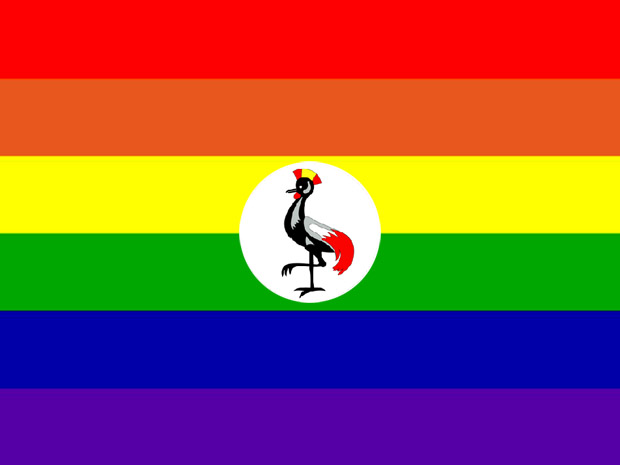
Half a world away, a very serious human rights matter has risen with tracks that follow back to our own yellow brick road.

Sure, Kansas queers have a couple of things we could complain about. It’s perfectly legal to be fired from a job for being gay in this state. A constitutional amendment exists to deny same-sex couples basic legal rights. However, there’s something gay Kansans do have here that our friends in the east African nation of Uganda may soon covet- the right to be alive.

It’s actually illegal to be gay in a number of places abroad. Punishment ranges from large fines to public beatings to prison sentences in many places. A bill has been introduced in Uganda’s parliament that would go beyond that by mandating the death penalty for what the bill’s author coins “aggravated homosexuality.”

Uganda be kidding, right?

Sadly, no, and it isn’t just gay people who need fear retribution.   Anyone who knows a gay person and doesn’t report their knowledge to the police will be thrown in jail. Anyone who advocates or speaks out on behalf of gay rights will also get locked up.  If you lived in Uganda, every person reading this magazine would be in big trouble—unless you turned me into the police to be executed!

As we Americans argue over if gay couples should be allowed to marry, elsewhere, there’s an argument taking place over whether gay people can just BE. I, of course, write this column with my western perspective.  In Uganda, family is a keen value; anything that threatens its traditional structure is a problem that must be stopped. Homosexuality is seen as being the death-keel to traditional family values, so thus, the death penalty is seen by some as a suitable solution. I know that different societies have different values and cultural beliefs. There’s a fine line between tolerance and tyranny, though.

There’s also apparently a not-so-fine line between Kansas and Uganda politicians.

The author of this bill, Uganda Member of Parliament David Bahati, is a key associate of the American “secret society” known as The Family. It is well documented that our own Senator Sam Brownback is among this ultra-conservative clan. Jeff Sharlet, author of a book documenting The Family’s ties, says the group has funneled millions of dollars into the Ugandan anti-gay campaign, and considers Uganda’s President Yoweri Museveni as the “key man” for protecting family values in Uganda.  Sharlet also says Museveni can go to Brownback if he wants money for arms or any other project—such as getting this bill passed.

This is quite troubling given the fact that Brownback is the apparent frontrunner to become Kansas’ next governor this fall. In the past, he has used his influential status to aid other global humanitarian issues, such as working to end international sex trafficking. On this issue, though, he has yet to comment or detail his involvement with Uganda officials as it relates. It’s a deafening silence; it’s not a quashing quiet, though.

We have the right to do something in Kansas that our gay brothers and sisters in Uganda don’t have right now. We can ask questions and demand answers. No one’s going to execute us in Wichita for demanding to know the depth of our Senator’s involvement. No one will go jail for asking him to use his apparent connections to speak against and stop this atrocity.  In fact, you can call his office right now and let his staff know you want to see some action– (316) 264-8066. It’s an issue that may seem a world away, but apparently it’s been blown straight to Oz!

(You can also e-mail Brownback’s office by filling out a comment form at http://brownback.senate.gov/public/contact/emailsam.cfm)

Homo, Here’s a Hope

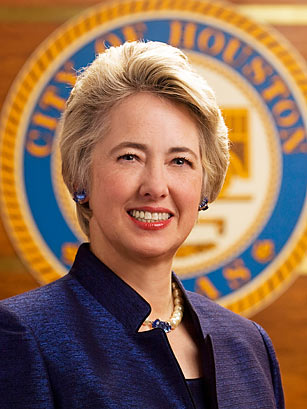
ImageIf you’re a gay looking for reasons to be grumpy, you can definitely find some! In the past few months, marriage for same-sex couples has been voted down in Maine and rejected by New York and New Jersey’s state legislatures. If you’re a homosexual looking for the happy, though, you can take heart in the election of Annise Parker, Houston’s first out-lesbian mayor and the homo-in-chief of the 4th largest U.S. city. We can’t get married, but we can get elected! Sometimes, outlooks are only as grim as you choose to view them.

Homo, here’s a hope!

A simple fact seems to have emerged over the last few years: Americans are becoming comfortable with gay people a lot faster than they are the idea of gay people getting married. Like it or not, it’s a reality we have to face, especially in more traditional places like Kansas.  That may not be such a bad thing, though!

Consider the numbers. Houston is a city with 2.2 million people now being lead by a lesbian. In contrast, there have been about 12,000 same-sex marriages in Massachusetts since it became the first state to allow gay nuptials in 2004. Over the past decade, the number of openly gay elected officials nationwide has risen by more than 200, with about 450 homos holding public office. There are cities much smaller than Wichita and states more conservative than Kansas that have city council members, county commissioners, sheriffs, and state representatives and senators who happen to be gay.  Most of these candidates didn’t run because of their sexual orientation; they ran because of they are community-oriented.

The numbers tell a simple fact—when folks get to know us as people, they judge our character, not our characteristics.  Aside from that, though, a broader, more significant impact is had when we take the focus off of ourselves and put it on to other people.  We’re affecting far more lives toiling to build stronger communities than we ever would sweating to plan the perfect wedding!

At the end of the day, all of us are just people. Often when we focus on the differences, though, we become representations of issues much larger than ourselves in the minds of others.  We’re better off toiling toward gradual acceptance than we are fast-tracking a controversy the culture-at-large isn’t ready to embrace. That doesn’t mean that we change our core beliefs or stop standing up for what we believe is right. It just means we accept reality for what it is and do what’s most effective.

Our Kansas motto implores us to look to the stars through difficulty. Those shiny, celestial objects point the way to distant, yet brighter days. True, there won’t be any homos getting hitched on the range anytime soon. But, could there be a city council member or mayor who happens to be gay in the near future? It’s certainly not outside the realm of possibility! Hope is only as far off as we allow it to be.

As Goes Maine

ImageAs goes Maine, so goes the nation.

That’s the political expression dating back to the Franklin D. Roosevelt-era that prophesized a national victory for his 1936 challenger, if only he could clinch the New England state’s electoral votes. Thought to be a bellwether for how the nation was trending as a whole, this idiom turned out to be quite idiotic. Al Landon  secured Maine’s coveted votes that year, only to see Vermont be the lone state to follow suit. Roosevelt went on to win the biggest Democratic Party landslide in history. As went Maine, so went pretty much nothing else.

But as goes Maine, so goes gay marriage?

As supporters of marriage equality find themselves in the familiar place of reeling after yet another electoral set-back, that’s a story worth remembering. Like a lot of people, I hoped that Maine would live up to its Latin motto Dirigo and establish itself as the leader for where this country is headed on the issues of diversity and inclusion. After stinging defeats at the polls in 30 states, I thought we were on the cusp of breaking the trend. I was ready for a night of celebrating. I reveled in the opportunity to live history. Initial results showed the repeal of the new marriage law trailing. I ordered a martini at my favorite local bar and was prepared to toast victory the minute it was announced. As the night wore on and the refresh button of my internet browser loaded up less than promising numbers with each click, I was feeling a hang-over before I could even take a sip.

The Pine Tree State had one last chance to get it right before the decade known as the 2000’s came to a close. One year to the day that California voters overturned gay marriage with Proposition 8, though, Mainers narrowly elected for the status quo. Their vote closed the door on history books recording this decade as the one when people embraced fairness.

My mind went back to re-live the scene that unfolded on the same night in 2008. Barack Obama had just been elected President of the United States. Jubilation and mirth permeated the grand Murdock Theatre where hundreds of Wichitans gathered to celebrate as they watched history unfold on the big screen.  Barack, Michelle, Sasha, and Malia took the stage, and as they did, a dream was realized and a giant wall crumbled. Tears of joy formed an ocean that washed it away; a moment was created that forever changed the national psyche for what is possible. I held the hand of one of my best and oldest friends as we watched from the balcony above the crowd. Herself the ancestor of slaves, this was the moment Bronwen had waited for—the moment when possibility matured into reality and the moment personal barriers began to fade. We clung tightly to each other, and we let history take control of us as we cried.

Within a matter of minutes, though, those tears of joy became tears of sorrow for me. I was alerted via text message that Proposition 8 was headed for passage in California. Gay weddings, which had been legal for nearly half a year, would cease the next morning. When Obama delivered his victory speech, one side of my face cried in joy; the other side cried in grief. It was the picture of irony on that majestic balcony when my hand intertwined with Bronwen, who herself has always been a vocal supporter of equality.  As one dream was realized, another was taken away.

Since that night, I’ve wanted my own moment to claim. I was hoping that Maine could give that to the gay community. After seeing the results of this and other recent elections, though, I think it’s reasonable to assume that we’re about five years away from any state affirming our rights at the ballot box. We’ve come a long way in a short amount of time, but we still have a few more steps to travel. Though it’s of little comfort in moments like this, the fact that 47-48% of a state can vote in favor of gay marriage after this really only being a true political/social for about a decade is quite remarkable. I remember the days when civil unions almost caused civil war in Vermont. Now, many conservatives are clamoring for the opportunity to support such measures as an alternative to full marriage equality. We WILL have our moment, but we need to think about what the moment is going to look like.

The day that the first state votes to affirm the rights of same-sex couples to marry will be the day that the first domino in a deck stacked wide against equality will fall. It will be the culmination of a culture transformed by a new generation taking ownership and an older generation opening up their minds. Already, we see shades of this as the margins of these ballot defeats narrow.

The Millenniums, virtually all of whom grew up with gay friends, will become more engrained in their communities and take ownership of them through the ballot box with each passing year. Generation X and The Baby Boomers, many of whom are uncomfortable with homosexuality, have their minds opened each day as family members and friends come out of the closet. Amidst talk of older generations needing to die off before equality can be realized is the silver-lining that silver-haired grandparents often re-evaluate their own feelings after they discover a beloved grandchild is gay. We’ve got a bit more educating to do. More of us have to come out and more of us have to have conversations with people about our lives. More of us have to become forces within our churches, workplaces, and communities. People have to be ready to accept us before the rights we’re working so hard to gain will be set in stone. This will all manifest itself one day soon at the polls. That first domino WILL fall. When it does, the rest will follow fast.

No one should have to spend a restless night running back and forth to a computer in the wee-hours of the morning to check election returns to see if they have the same rights as other people. The pain these ballot measures cause in states half a coast is real. Palpable emotions ensued in all corners of the country as voters in a tiny state took away a moment so many of us hoped for.

But just like Maine failed to be a bellwether for the Landon for President campaign in 1936, so too has it fallen short of being a predictor for the national movement for marriage equality. No one state—or 31 states for that matter—can change the momentum that comes with each passing day. Those of us who are reeling today would do well to double our efforts to stand out and make a difference in the communities in which we find ourselves. That is how we change tomorrow.

Our friends in New England may have a great state for lobster, but as far as predicting social and political trends, as goes Maine, so does NOT go the future.

40 Years Later

Image

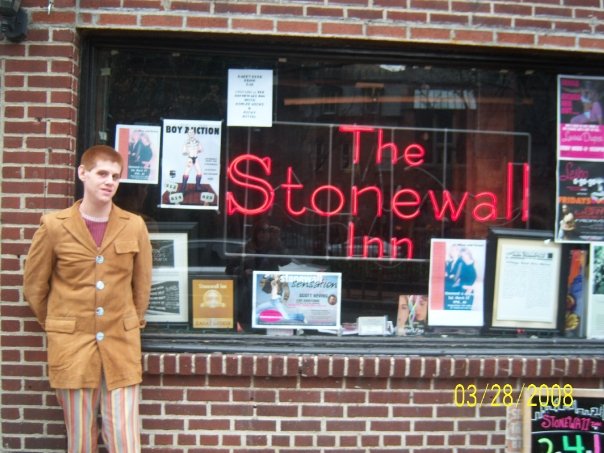
My first visit to the Stonewall Inn. Every gay person with a political conscious will take a picture in front of this spot at some point in their life if they make it to NYC.

Tonight, there’s a party in Greenwich Village. It’s the 40th anniversary of the Stonewall Riots and the birth of the modern US gay rights movement. People are dancing in the streets of this iconic Ney York City hamlet where so much modern history was invented. This  in stark contrast to the dearth of mirth that characterized that balmy night four decades ago when gay people fought back virulently and in mass for the first time in history against organized oppression and intimidation. Since then, closet doors have swung open, political power has been amassed, legal battles have been fought, and generation shifts are leading toward what will one day be near universal acceptance for LGBT individuals. Yes, the times have changed!

I wanted to be there for the occasion. I’ve been planning to be there for well over a year. Plans change, though. Tonight, I’m in Wichita- by choice.  For me, there’s no time to celebrate the revolution that began half a coast away; we have our own story to play out, here on Kansas soil.

When drag queens, street kids, and other random homos hurled bricks and other objects at the police who were attacking and intimidating them on that fateful night, they were really launching a full-on assault at the closet.  For too long, homosexuality had been a taboo, tasteless topic. Society was too uncomfortable to reckon discomforts and value conflicts with a reality that couldn’t be denied. People who were gay lied—to themselves and everyone else around them. They blended in, often marrying and having children, all the while doing anything to appear “normal”. The secret alternate life many constructed parallel to this existence was far from anything that should ever be labeled normal, though. It wasn’t uncommon for gay people to have secret, underground rendezvous with others who were like them. They were forced to socialize in seedy bars that were often fronts for mafia-related operations. They had undercover lovers and secret worlds. They were one person with two compartmentalized lives. It was a broken system of existence. It had to end. It is said of the Stonewall Riots that it was the “hairpin drop heard round the world.” That hairpin picked the lock of the closet, and a world of new possibility was opened up for later generations.

My life is the manifestation of what people were fighting for that night. By the time I was coming of age in the 1990s, I was able to recognize early on in my development that I was attracted to men. I lived in a world where homosexuality was a definitive identify. MTV’s “Real World” was giving America a glimpse into the humanity of gay individuals. Clinton had tried to let gays serve openly in the military. Courts were debating the subject of gay marriage. Ellen Degeneres was out on television. Gay was a public issue, and when I admitted my same-sex attraction to myself at the age of 14, I accepted that I would forever be part of a controversy larger than me.  As I grew older, though, I began to see shifts. Closet doors opened for me and my peers by generations past were allowing new possibilities for life in the present. I’ve been able to make hundreds of friends, build a community, launch a successful political, and be a relevant force in helping build and revitalize a city, all as an openly gay person. I did this in Kansas, far from where the revolution began.

Greenwich Village gave birth to a movement. Harvey Milk and the city of San Francisco helped raise it. AIDS threaded to kill it. Individuals all over the country coming out of their own closets saved its life. Legal rights were won in cities and states across the US. Whereas forty years ago it wasn’t legal to be served an alcoholic beverage in New York City if you were gay, it’s now legal in six states for gays to marry. We’ve come a long way, but we have a long way to go.

The Gay rights uprisings may have started on the coasts, but the importance of the struggle for acceptance is shifting to the center of the country. The last battle s will be played out in America’s heartland. If we do this right, we can finish what was started decades ago. We have an opportunity as Kansans to show the rest of the world how we can peacefully and respectably co-exist. It’s true that we are a conservative state, but more important is the fact that we are a conscious people.

The key is getting out there! We need to be out of the closet—and sadly, there are too many doors still tightly shut here on the range.   When people know who we are, it’s harder for them to hate us. When people see how normal our lives are, they’re less uncomfortable around us. Since the days of Stonewall and the uprising of a “gay community”, we’ve had tendency to cluster ourselves with those who are like us. We do this at our own detriment. When we’re working and socializing side by side with people who are different, we’re tearing down barriers on both sides. We can move beyond the rhetoric of the “culture wars” by understanding and accepting the differences within each other. We can learn to accept that some people won’t always agree with us and we won’t always agree with them. If we know each other, though, and we respect each other, we can probably all agree that we should have the freedom to live our lives the way we feel is best.

That’s the mission I’m going to be working to carry out. That’s why I’m happy to be in Wichita, KS and not New York City on the 40th anniversary of the Stonewall Riots. True, I’d love to be partying in the streets right now, but when you’re able to be yourself anywhere you go, life’s always a party! What I’ve been able to do with my life, and what I will continue doing, is exactly what that night was all about. Each of us—in our own places and in our own ways—must throw our own proverbial bricks at those closet doors and pick the lock with our own hairpins to let the glory that is within each of us shine in this world unashamed.

Gay-Away: A Midwestern Movement

Image

Photo by David Quick

The Midwestern Gay Movement.

I’m not talking about an organized group of queers raising awareness, organizing rallies, or staging events.  While we do have political groups in the region that do good work for the gay community, sadly I’m referring to a different type of motion. Gay people from states like Kansas have a tendency to get the hell out of here as fast as they can. This mass exodus can often feel like the most significant movement that has taken place within the local LGBT community in recent years.

Kansas has a long-identified “brain drain” problem.  Young, talented people often choose to flee our cities for greater opportunities in larger, more urban areas on the coasts because they feel they can’t have the quality of life they desire in their home state. We have a parallel problem in the LGBT community. Call it a “gay-away”!

From the minute young queers come out of the closet, most are itching to get away. They feel that Kansas isn’t a safe place where they can be themselves. They don’t believe that their love—and by extension who they are as people—will ever be accepted in towns with reputations for being a bit on the backward side.  They don’t see a widespread, visible gay community they can safely fit into. They come to a simple conclusion—they’re not welcome in the middle of the country. So, when they graduate high school (if they couldn’t get away then, definitely when they’re out of college), they pack up their talent, take with them their dollars, and make a home somewhere that ISN’T over the rainbow.

Within this reality, there are plenty of losers. The gay community gets smaller every time this occurs, diluting our political power and social influence. Gay individuals leave behind treasured memories and all of the people and places that made “the range” feel like home. Those they leave are left with empty voids .The cities and states themselves are perhaps the biggest losers, though. Every person who moves away from Kansas takes with them their potential involvement in the community, their probable contributions to local industries, and their definitive impact to the local economy. When it comes to having a strong state with bustling industries and a vibrant economy, does the sexual orientation of those participating really matter?

The answer is obvious to me, but it’s up to us as a collective to really address that underlying issue. The LGBT community can mitigate this “gay-away” by refusing to feel that they have to leave their home to be themselves. The community at-large can be proactive in welcoming and embracing people from all walks of life. We don’t have to agree on every issue to be one, unified community. We can all be ourselves without threatening other people’s values. Let’s face it, life on either coast in the major cities is fast paced and pretty expensive! Here on the range, it’s much more affordable and relaxing. Sometimes the boldest thing you can do in life is to simply stand your ground. Each gay person who elects to stay in Kansas does just that.

It’s time for a new gay “movement” in Kansas. Instead of moving away, let’s move this entire state forward together!

Next Newer Entries